Friday, October 23, 2015

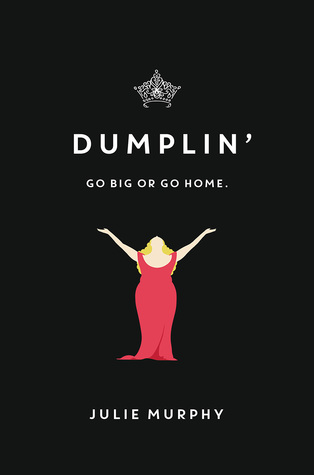
Dumplin'

Dumplin' My absolute favorite thing about Julie Murphy's Dumplin' was its positive-body message: I wish there had been a book like this to read when I was in high school.

Willowdean Dickson ("Dumplin'" to her Mama) is a plus-size teenager with a big heart, who's generally accepting of her body. (But not always, which I liked, because what teen girl always likes who she is?). At her fast-food job, she meets a private school named Bo and not surprisingly ends up crushing on him. But to her surprise, he seems to like her too.

But Willowdean isn't as secure in the relationship as she hopes to be, and in an effort to reclaim some of her confidence, she decides to enter the local beauty pageant (which, not so incidentally, her mother runs) to prove that you don't have to look a certain way to like  yourself or feel beautiful. And when several of her misfit friends join in, even Willowdean can't predict the outcome.

Willowdean had a fun voice, and I liked that her friends were all distinct individuals with different voices. Some reviewers have charged Willowdean with hypocrisy for not always thinking nice things about her friends, but I think that just added to her realism. She's not perfect, but she's trying.

The romance was a fun side-note to the story, but for me the heart of the story was in Willowdean's relationship with her friends. A fun, quick read.

As a side note: I got to meet Julie Murphy at a writing retreat a couple months ago and she's just as generous and fun as you'd expect from someone who writes a story like this.

Wednesday, October 21, 2015

Writing in the gaps

Before kids, my writing time looked something like this: set aside a dedicated block of time (minimum four hours preferred), keep a stack of reference books and copious notes handy, write, reflect on writing, take a short break, repeat. Granted, most of that writing was seminar papers and a dissertation prospectus, but looking at it from this distance, I'm envious of all the time young me had for writing.

When my first child was born, that schedule disintegrated. Instead of planning my own schedule, I was suddenly at the mercy of a seven-pound tyrant who ate and slept according to some arcane schedule I couldn't quite grasp. For the first couple months, I was vaguely convinced I was going mad: I was sleep-deprived, overly emotional, and what little writing I managed to produce was so clearly inferior to what I'd done that I wondered if I'd lost brain cells with the delivery.

It did get better. I learned to write in the gaps, in the forty-five minute snatches of time when he'd nap, in the early evening after he slept. Of course, once he got old enough to really follow a schedule, we added a second child, and four years after that, a third. My youngest is now three and in preschool (hallelujah!) so my stretches of time have gotten longer and more predictable, but I still struggle with balance--with giving my whole focus to my children and then switching that whole focus to my writing. Some days I succeed. Other days (many other days), I don't. Like right now: while I'm typing away to meet a self-imposed deadline for this post, I failed to monitor my potty-training son, who just announced that he's "pee-pee." (That makes, for those keeping score, the third accident today.)

Oldest kid at 1, taking advantage of his mom's distraction to decorate the house with tissues


I am not the primary breadwinner in our household: we decided early on that while my husband pursues tenure at a university, I would stay home full-time and teach part-time and write in whatever cracks of time were leftover. This meant that in the early years of our marriage I did almost no creative writing, until I reached a point where I realized this was not simply something I wanted to do, but something I needed to do, a part of me I needed to reclaim from the wilds of mommy-land. Until recently, writing was an unpaid labor of love for me, which meant its priority ranked below parenting, teaching, other community responsibilities (but not, to my mother-in-law's chagrin, below housework). Though now that I'm on contract, I still struggle to shift my mindset, to remember that I'm entitled to the time to write--in fact, I'm contractually bound to that.

But there's never enough time for all the things I want to do--and the time I do have is frustratingly elastic. Hours when my son is at preschool or the kids are sleeping speed by; hours when I am home with the three-year-old seem to crawl by.  Before my first child was born, a good friend took me aside and warned me, “One of the hardest parts about being a mother is the boredom.” I looked around me at her comfortable home; at her two blond-haired blue-eyed children looking at a picture book near our feet; at the quilting project slung half-finished over the sewing machine; at the partially constructed puzzle on the floor–and I didn’t believe her.

Then I had my son. Once the initial shock and exhaustion wore off, I started to wonder if maybe my friend was right. Sure, there were those exalted moments when I snuggled my cheek against his, when I watched the tiny play of movement across his face while he slept, when we read books together and he laughed–but in between those moments were other, less exalting events: countless iterations of diaper changes, settling–again–in the chair where I seemed to nurse endlessly, and even, sometimes, trying to play with my son. Although he was fascinated by the colored blocks I offered him, there was only so much interest I could sustain in them.
 
It does get easier as they get older: their interests become more complex, they can sustain real conversations, and few things have been more thrilling than seeing my older kids get lost in books that I also love. But the time I spend with them is still not fully my time--it's time borrowed away from the stories I could be writing, the books I could be reading.

I wouldn't trade away that time, frustrating as it can be. I remember hearing a story about J.K. Rowling, whose child had asked her what she would choose if she could only do one: be a mother or a writer. She said she'd be a mother--but she'd be grumpy about it.

That's me, too. I'm a better mother because I'm a writer, because my brain has something to do when it's off the parenting clock (or, let's be honest, sometimes when it's on), because I have goals beyond making sure my kids survive.

But I think I'm also a better writer because I'm a mom. Writing has made me less precious about my writing time, which makes me both more flexible and better at time management--I can do in an hour now what took me two or three hours before kids. But more than that, nothing in my life has been so frustrating, agonizing, joyous, or surprising as parenting. And that deeper emotional range informs my writing in ways I couldn't have imagined before I began writing in the gaps.

This post is part of a parenting blog hop, part of Aliette Bodard's awesome brain child, something she began with several UK writers and graciously allowed a few US writers to crash. You can see the other posts here:


Sunday, October 11, 2015

Always Will

Melanie Jacobson is quickly becoming one of my auto-buy authors. Her romances are inevitably fun, smart, swoony (and clean, if that's your thing). I pre-ordered this one, and though my to-be-read list threatens to collapse under it's own rate, I snuck this one to the front of the pile and read it in two sittings.
Always Will
Hannah Becker has loved her brother's best friend, Will Hallerman, since she was a teenager. But as an adult, she's determined to put aside that childhood crush and move on with her life. That is, until Will, who lives down the hall from her (he took over her brother's apartment after her brother got married), decides it's time for him to follow her brother into nuptial bliss. Will approaches dating like he does everything else, with the full force of his not-inconsiderable mind (he's a literal rocket scientist). He tries out a variety of dating sites determined to eliminate "system inefficiencies" and find the perfect woman. His new approach only makes Hannah realize she's not over him--and this is her last chance to change his mind. But her attempts to manipulate his dating life only complicate things between them, and if Hannah can't find a way to make things right, she may lose Will for good.

I love the idea of a best-friends romance, and though I didn't always agree with Hannah's decisions, I spent the second half of this book with that pleasant kind of pain that the best romance books always bring out in me.

Monday, October 5, 2015

A School for Brides

A School for Brides: A Story of Maidens, Mystery, and MatrimonyI enjoyed Patrice Kindl's Keeping the Castle, so I was delighted to stumble across her companion novel, A School for Brides, in which eight young ladies have been sent to the country for a school to train them to be proper brides: the only problem? There are no eligible gentlemen in the country. So when Providence (in the form of an accident) drops a young man into the school for convalescence and his two good friends show up to keep him company, the girls are delighted and set to work winning them at once.

I thought this was a fun, clean YA regency. It wasn't particularly complicated (though I admit one of the romances did surprise me a little), but it was a great fluff read. Some of the characters were drawn more deeply than others, but all were affectionately characterized.

Monday, September 28, 2015

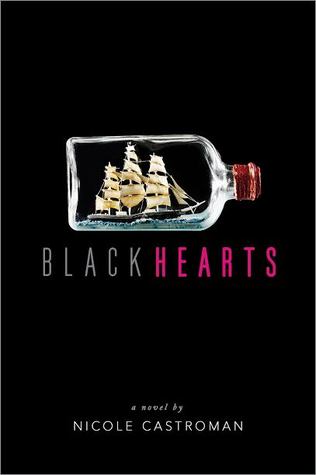
Blackhearts

Blackhearts One of the biggest pleasures of being part of the Sweet Sixteen debut group is getting to participate in the ARC (advanced review copy) tours of books that aren't out yet for public consumption. So far, I've read some amazing books, and Nicole Castroman's was no exception. Nicole is also repped by Adams literary and we'd connected on social media over our shared love of BBC's Poldark, so I was particularly excited for this book. (Also, in a funny, small-world way, Nicole's sister-in-law was one of my roommates in college).

The story is essentially a Blackbeard origin story, how Edward "Teach" Drummond, after a year at sea, returns home to find his life mapped out for him by his wealthy merchant father, who wants him to marry into the nobility. But Teach yearns for the sea, and discovers that his fiancee isn't the woman he remembered. More, there's an intriguing young woman in his father's house whom he finds himself drawn to.

Anne Barrett is the illegitimate child of a merchant and a former slave--after her father's death, her half-brother establishes her in the Drummond household as a servant. But Anne also wants something better: she's determined to make a better life for herself than one of servitude. But then she meets Teach, and her plans become infinitely more complicated.

There were lots of things I loved about this story: I thought the historical setting was a lot of fun, and I loved the realistic depiction of Anne's situation and the hard choices she faced. But mostly, I loved the relationship between Anne and Teach.

Readers who go into the story expecting a swashbuckling pirate story may be disappointed, because this is not that story--but it's a frequently tense, romantic story with its own share of intrigue and danger and (yes) potential heart-break. Definitely worth a read when it comes out in January.

Tuesday, September 22, 2015

The Sound of Life and Everything

The Sound of Life and Everything I might be prejudiced toward this lovely middle grade book because I've met the author (and my sister is one of the lucky early readers mentioned in the acknowledgments)--but I don't that matters much. The story is a powerful, heart-warming exploration of prejudice, love, and family in post WWII California.

Ella Mae Higbee's crazy aunt has found a scientist who thinks he can resurrect her cousin Robbie, killed at Iwo Jima, from some blood on his dog tags. But when Ella Mae, her mother, and aunt show up at the laboratory, it's to find a young Japanese soldier waiting for them instead of Robbie. While their aunt repulses the boy, it's up to Ella Mae and her mother to take him in, and find their lives transformed in exchange.

Although the science in the book is a little far-fetched and the premise might lead you to expect a more science-fictiony adventure story, the story is a touching look at friendship, as the boy (Takuma) becomes Ella Mae's best friend, and Ella Mae struggles to understand how his presence can unleash so much turmoil and hatred in her small town, even in her family. But I loved how fiercely Ella Mae and her mother fought for him, and for doing the right thing. A terrific look at a historical era and a great jumping point for discussions about prejudice and friendship.

Monday, September 21, 2015

Bone Gap

Bone Gap I started Laura Ruby's remarkable book on a plane a few weeks ago--and then set it aside for a little while because it was too creepy to read as my bedtime book. But it's a lovely, intricate, surprising story, fully deserving of it's National Book award nomination.

Bone Gap is a character in its own right, a midwestern town that holds its own secrets, nestling in a corner of the world where there are gaps in the bones that hold up the world, and things that come through those gaps.

Brothers Finn and Sean O'Sullivan are still reeling from the mysterious appearance of a lovely Polish girl, Roza, and from her abrupt disappearance--Finn all the more so because he knows she didn't disappear, but was kidnapped, and he can't get anyone to believe him.

Told mostly from the perspectives of Finn an Roza, the book is a wonderful, lyrical story of loss and heartbreak, about losing and finding love, about having courage in the face of the unimaginable. The book is billed as magical realism, which I can see, though I found some of the magic leaning a bit more toward outright fantasy, which didn't stop my enjoyment at all.