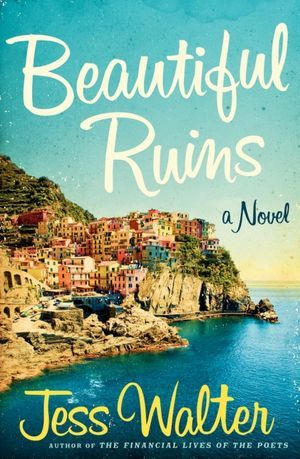
 Describing the plot is difficult, because it's a sort of meandering, densely interwoven plot that jumps back and forth between time periods (the present and Italy in the 1960s, among others). But it's the characters that pull the story along: Pasquale, the idealistic Italian with a good heart, trying to make a go of his father's penzione in a tiny town in Cinque Terra; Dee Moray, a lovely American actress recuperating in his penzione after a disastrous experience on the set of Cleopatra; a ruthless studio executive; a young writer/play-wright whose expectations of success center around a pitch of the Donner party story; a musician about to self-destruct, and so many others. What really amazed me about this book--aside from the lush quality of the writing--was the way the writer was able to make even unlikeable characters if not likeable, than understandable. I was also impressed by the complex story structure, the way different stories interrupted each other and then wove into each other. And while many of the stories, particularly in the middle, seemed depressing and hopeless, I was struck by the way Walter managed to bring them all together in a way that was both beautiful and inspiring without being too mawkish. If I were to sum up the theme of the book, it would be that life is often a "beautiful ruin," but it's worth living nonetheless.
Wednesday, April 30, 2014
Beautiful Ruins
This isn't the type of book I usually pick up, but it came highly recommended by people whose judgment I trust, and I'm so glad I picked it up.
Describing the plot is difficult, because it's a sort of meandering, densely interwoven plot that jumps back and forth between time periods (the present and Italy in the 1960s, among others). But it's the characters that pull the story along: Pasquale, the idealistic Italian with a good heart, trying to make a go of his father's penzione in a tiny town in Cinque Terra; Dee Moray, a lovely American actress recuperating in his penzione after a disastrous experience on the set of Cleopatra; a ruthless studio executive; a young writer/play-wright whose expectations of success center around a pitch of the Donner party story; a musician about to self-destruct, and so many others. What really amazed me about this book--aside from the lush quality of the writing--was the way the writer was able to make even unlikeable characters if not likeable, than understandable. I was also impressed by the complex story structure, the way different stories interrupted each other and then wove into each other. And while many of the stories, particularly in the middle, seemed depressing and hopeless, I was struck by the way Walter managed to bring them all together in a way that was both beautiful and inspiring without being too mawkish. If I were to sum up the theme of the book, it would be that life is often a "beautiful ruin," but it's worth living nonetheless.
Describing the plot is difficult, because it's a sort of meandering, densely interwoven plot that jumps back and forth between time periods (the present and Italy in the 1960s, among others). But it's the characters that pull the story along: Pasquale, the idealistic Italian with a good heart, trying to make a go of his father's penzione in a tiny town in Cinque Terra; Dee Moray, a lovely American actress recuperating in his penzione after a disastrous experience on the set of Cleopatra; a ruthless studio executive; a young writer/play-wright whose expectations of success center around a pitch of the Donner party story; a musician about to self-destruct, and so many others. What really amazed me about this book--aside from the lush quality of the writing--was the way the writer was able to make even unlikeable characters if not likeable, than understandable. I was also impressed by the complex story structure, the way different stories interrupted each other and then wove into each other. And while many of the stories, particularly in the middle, seemed depressing and hopeless, I was struck by the way Walter managed to bring them all together in a way that was both beautiful and inspiring without being too mawkish. If I were to sum up the theme of the book, it would be that life is often a "beautiful ruin," but it's worth living nonetheless.

Monday, April 28, 2014
The wonderful, weird world of writing conferences
I just got back from a wonderful weekend at the LDStorymakers conference.
The more I attend conferences like this, the more convinced I am that writing conferences are critical for writers (and not just aspiring ones).
Here are some reasons why:
If you went to Storymakers--what did you love about it/learn from it? What other writing conferences have you been to--and what did you learn from them?
The more I attend conferences like this, the more convinced I am that writing conferences are critical for writers (and not just aspiring ones).
Here are some reasons why:
- Craft. I learn so much about how to improve my writing (see below).
- Motivation and encouragement. I come away motivated to work harder--but also encouraged that it is possible to reach my goals. I also learn that there is no one right way to be a writer.
- Expanding circle of friends.I loved seeing old friends and making new ones (and this coming from a dyed-in-the wool introvert). I think it's critical to have writing friends--people who understand both the highs and lows of writing. Other friends and family can sympathize, but they can't empathize
- Mentors. At writing conferences, I always meet writers who are more advanced in their careers than I am who offer me terrific advice--but I'm also in the position now of offering advice to writers who are newer to the process than I am. This year I had a chance to present on how to give feedback in critique groups, and I loved it.
Some specific things I learned from Storymakers
Of course, I could probably write pages about things that I learned, but I want to stick with a few specific ideas that stood out to me.- Emotional pacing is just as critical to a successful novel as plot pacing. Emotional pacing looks much like a roller-coaster: lots of ups and downs to provide variety and keep us engaged in the main characters. (From the inimitable Kristen Chandler).
- For historical novels, primary sources can be invaluable to getting into the head of your point of view character. Matthew Kirby described his fascinating research process behind Ice Fall, reading Norse Eddas to get a sense for the values and perspectives of the culture.
- Voice is not the same thing as style: voice is your particular worldview as an author (something that transcends a particular book or genre); style is just a vehicle for voice. (From Lisa Mangum).
- Strong YA heroines aren't just a reflection of their physical strength--in fact, many of them draw strength (and dimensionality) from their flaws. (Sara Larson).
- Authors aren't always right--even authors whose books you love. But you can still learn from people you disagree with. Orson Scott Card gave a very *ahem* interesting key-note address. While I didn't agree with much of what he said about the anti-religious culture in higher ed and the anti-intellectual culture in some areas of the LDS church, I did wholeheartedly agree with his conclusion: that it's more important to be a good person than to be a good writer, and that your life and your writing will be better if your priorities are aligned. (To see some hilarious audience reactions to his speech, check out the twitter feed for #storymakers14 from Friday night (4/25)).
If you went to Storymakers--what did you love about it/learn from it? What other writing conferences have you been to--and what did you learn from them?
Friday, April 25, 2014
Elizabeth Smart: My Story
 This was a difficult book to read, primarily because of the content--the constant rape and abuse that Elizabeth Smart endured in the nine months of her captivity. Like most readers, I remember feelings of horror when her abduction was announced and the media frenzy that followed. I also distinctly remember when she was found: I happened to be trying on wedding dresses with my mom and my sister when the story broke.
Her story, as it goes, is straight-forward enough: Brian David Mitchell encountered her and her mother and sister in downtown Salt Lake City nearly eight months before her abduction and devised then a plan to take her and make her one of his "wives." The book recounts in detail how he planned and executed her abduction, the months of terror (and boredom) while she was kept chained in a camp high up in the Utah mountains, their eventual move to California and their return to Utah where she was finally recognized and rescued.
I don't think anyone should have to endure what she did--and for her to have emerged from that a gracious, hopeful, happy young woman is quite remarkable. This book isn't particularly well-written, but the story that emerges is still engrossing, often horrifying, but equally often inspiring, particularly Elizabeth's grit, tenacity, and faith. The writing often seems simplistic--I don't know if this was a stylistic choice to reflect the naivety of Elizabeth when she was abducted (she was only fourteen, still a child in many respects--a girl who would rather jump on the trampoline with her best friend than talk about boys, a girl who hadn't even started menstruating). Most of the time, the style didn't bother me, as it allowed the story to proceed without adornment. But sometimes it was distracting--the abundant use of exclamation points, and the tendency to tell (it was terrifying!) instead of showing. And I realize this is a difficult point: some of the things that happened were so horrible that she glosses over them instead of going into detail, but when I'm told how a character feels rather than being shown, I tend to feel distanced from them. In this case, feeling that distance makes for an uncomfortable reading experience, as if I'm seeking entertainment from her story rather than compassion and understanding.
I do think the story misses an opportunity to explore some of the more conflicting moments of her story--for instance, the reasons why she didn't seek help when Mitchell took her to the streets of Salt Lake City (she explains that she was terrified, which is likely true, but sometimes the explanations of what she was thinking or feeling feel a little too pat, as if the family was determined that she always be seen in the best possible light: she was always determined to make the best of things, to be hopeful, to remain devoted to thoughts of her family). And maybe this is true, but when I read memoir and biographies I'm drawn to complexity, to reflections that challenge me and change me and make me think. I admired Elizabeth for her strength, but I don't feel like reading this fundamentally challenged me.
I am interested, however, in the idea of choice--perhaps its not surprising that in a story that centered so much about Elizabeth's lack of choices (she had no say in her abduction, no say in many of the activities she was forced to do) that the primary theme that emerges in the end is about choice: about Elizabeth's choice not to fixate on her captives, to forgive them but not wonder what happened to them, to choose to look forward instead of obsessing about the past that she cannot change.
Wednesday, April 23, 2014
Gilded
Christina Farley, Gilded
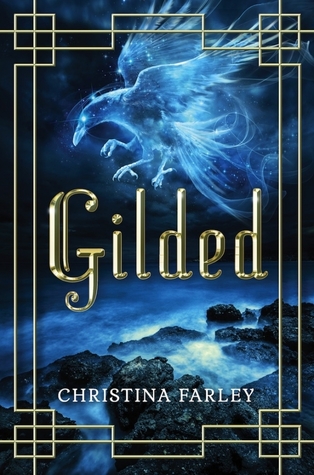 I picked up this book a couple of months ago (part of the Amazon First program) and, now that I'm done frantically trying to finish the Whitney Award books, I finally had time to read it.
Jae Hwa is a sixteen-year-old Korean American girl living in Seoul, Korea, for the first time as her father has transferred to a new position and both he and Jae are still recovering from the death of her mother. But not long into their stay, strange things begin happening. Jae sees creatures out of Korean folklore, and her grandfather hints at a centuries-old curse plaguing her family: namely, as revenge for his rejection by Princess Juwha, the demon Haemosu has been stealing away the oldest young woman in each generation.
This just happens to be Jae. And despite her martial arts skills, this is one battle that Jae can't win alone.
I have really mixed feelings about this book. I love mythologically-based fantasy (both historical and contemporary), and Farley includes some lovely, rich details of Korean mythology. The setting, too, was wonderful: nice details and evocative images. But I struggled to warm to Jae, who often does stupid and impetuous things just because she can (and I know that lots of teenagers are impetuous, but Jae seems dangerously so sometimes). And, as other reviewers have pointed out, it seems a little problematic that in a story centered around Korean mythology and culture, Jae's love interest is an American guy, and his American parents are often the key to her solving the mysteries that face her.
That said, I'm not sorry I read it--I learned a lot of cool stuff about Korean mythology and the plot moved quickly enough that I was never bored (although annoyed, sometimes, yes).
I picked up this book a couple of months ago (part of the Amazon First program) and, now that I'm done frantically trying to finish the Whitney Award books, I finally had time to read it.Jae Hwa is a sixteen-year-old Korean American girl living in Seoul, Korea, for the first time as her father has transferred to a new position and both he and Jae are still recovering from the death of her mother. But not long into their stay, strange things begin happening. Jae sees creatures out of Korean folklore, and her grandfather hints at a centuries-old curse plaguing her family: namely, as revenge for his rejection by Princess Juwha, the demon Haemosu has been stealing away the oldest young woman in each generation.
This just happens to be Jae. And despite her martial arts skills, this is one battle that Jae can't win alone.
I have really mixed feelings about this book. I love mythologically-based fantasy (both historical and contemporary), and Farley includes some lovely, rich details of Korean mythology. The setting, too, was wonderful: nice details and evocative images. But I struggled to warm to Jae, who often does stupid and impetuous things just because she can (and I know that lots of teenagers are impetuous, but Jae seems dangerously so sometimes). And, as other reviewers have pointed out, it seems a little problematic that in a story centered around Korean mythology and culture, Jae's love interest is an American guy, and his American parents are often the key to her solving the mysteries that face her.
That said, I'm not sorry I read it--I learned a lot of cool stuff about Korean mythology and the plot moved quickly enough that I was never bored (although annoyed, sometimes, yes).
Monday, April 21, 2014
Whitney Suspense finalists
I'd meant to post an individual review for each of the Whitney suspense finalists and then, well, life (in the form of the end of the semester) caught up with me.
So here they are enmasse.
My favorite of the suspense novels was Josi Kilpack's Rocky Road.
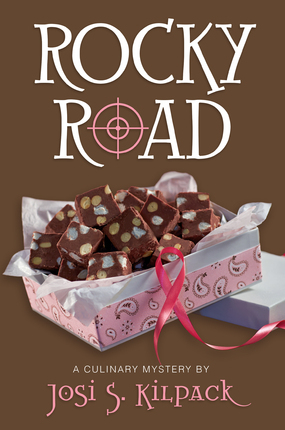 I'll admit. When I read my first Sadie Hoffmiller mystery, I wasn't that impressed. But I've read several more over the last couple of years and one of the things I admire most is Kilpack's ability to grow her character. Sadie changes over the course of the series, learning new abilities, maturing as a sleuth, and even wrestling inner demons. In this book, contrary to her eagerness to investigate early mysteries, Sadie is only reluctantly drawn into an investigation. She'd hoped to spend her weekend in Southern Utah with her friend Caro and Caro's cousin Tess, enjoying manicures and food and prepping for an upcoming cancer run/walk. But when the founder of the cancer run disappears, and Caro and Tess confront her with details about Dr. Hendrick's disappearance that don't match up, Sadie is compelled to ask a few questions of her own. What I loved most, in addition to Sadie, was the local color. This book is set within an hour of my home and I've been to nearly all the places she describes and I loved seeing my world through Sadie's eyes.
But I will say that all of them were engaging and had their strengths.
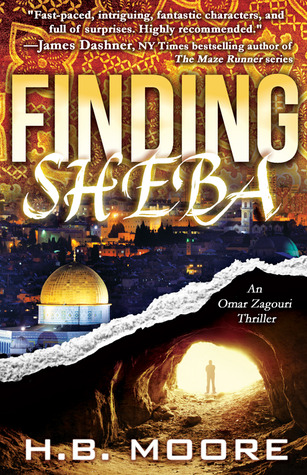 My Segullah friends had mixed feelings about Heather Moore's Finding Sheba, which mixes historical accounts of the Queen of Sheba with modern-day archeological digs searching for evidence that the queen existed. The novel was ambitious and because of that it's hard to keep track of characters early on. But I enjoyed it. I thought the politics surrounding the digs were fascinating and believable. I didn't connect as well to the Queen of Sheba, who made some oddly quixotic decisions (which resulted later in confusing and contradictory archeological evidence--which made her choices seem less the result of a consistent character than a reason to intensify the mystery). But on the whole, I enjoyed it, and the fast pace kept me reading into the night to finish.
Tracy Abramson, Deep Cover
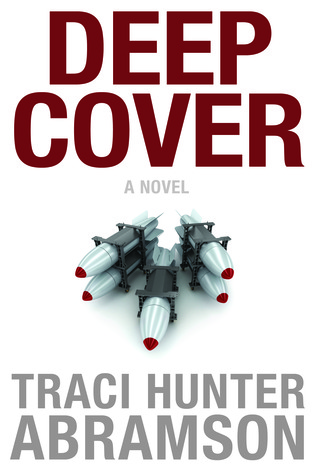 Abramson worked for the CIA before becoming a writer, and some of her familiarity with that world shows through in this novel, an interesting look at the conflicts faced by a woman of faith who has to lie to the world as part of her job. At 28, Kelsey Webber is living in the Middle East deep in a cover identity as a governess in a terrorist extremist's compound. But after getting shot, she's pulled out and sent home to Virginia to recuperate--but it isn't long before her past catches up with her and she's asked to share her skills and knowledge to try and hunt down local terrorist cells.
Living in her parents' empty home (they are away from home on a church service mission), Kelsey meets and begins to fall for their friend and neighbor, Noah Cabot--who not so coincidentally works for the FBI. Both of them are in the business of keeping secrets, and even as a new threat forces them to work together, the secrets they share (and the ones they keep to themselves) might be the undoing of their fledgling relationship. While I didn't love this book, I found it interesting, particularly the ways Kelsey tries to navigate living her faith but also living in deep cover. It was also interesting to watch her navigate her family's feelings (most of whom thought her non-appearance at major holidays stemmed from selfishness, not the fact that she was risking her life for her government). For me, the suspense plot was actually of secondary interest compared to the personal storyline.
Jordan McCullom, I, Spy and Spy for a Spy
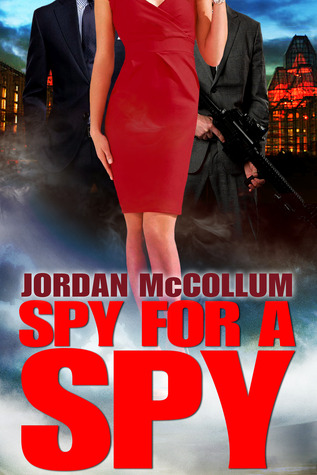 The first two books in McCullom's Spy Another Day series were both Whitney finalists. In the first, readers are introduced to Talia Reynolds, a CIA operative working in the unlikeliest of spots: Ottawa, Canada. The tensions in this book operate on two levels: on one level, Talia has just gotten herself in over her head posing as an attractive (if lonely) Russian woman to try and get information from a Russian businessman in town for a few days. On the other, Talia's day job is posing increasing complications for her personal life, namely, her boyfriend Danny, who knows nothing about Talia's real work. I enjoyed the book--I thought it was a fun, quick read, and Talia's quirky voice was amusing.
In Spy for a Spy, Talia and Danny are now engaged and Danny knows (mostly) about Talia's dual life. But when Talia's long-time boss is moved to another division and her new boss shows up, she realizes she's in for more trouble. Her new boss is her ex-boyfriend, and one with an axe to grind. He tells Talia he has reason to believe that her former boss might be a traitor, and while Talia is reluctant to believe him, she knows she has to investigate. But the more she searches, the more she uncovers, and the more dangerous things become for her. I didn't enjoy this one as much as the previous one--while Talia's voice is still fun and fresh, I struggled to understand why she was keeping so much from Danny (she doesn't tell him that her new boss is her ex) and why she didn't enlist help earlier in her spying. Of course, secrets are at the heart of any spy story, but not all of the secrets hung together for me here.
So here they are enmasse.
My favorite of the suspense novels was Josi Kilpack's Rocky Road.
I'll admit. When I read my first Sadie Hoffmiller mystery, I wasn't that impressed. But I've read several more over the last couple of years and one of the things I admire most is Kilpack's ability to grow her character. Sadie changes over the course of the series, learning new abilities, maturing as a sleuth, and even wrestling inner demons. In this book, contrary to her eagerness to investigate early mysteries, Sadie is only reluctantly drawn into an investigation. She'd hoped to spend her weekend in Southern Utah with her friend Caro and Caro's cousin Tess, enjoying manicures and food and prepping for an upcoming cancer run/walk. But when the founder of the cancer run disappears, and Caro and Tess confront her with details about Dr. Hendrick's disappearance that don't match up, Sadie is compelled to ask a few questions of her own. What I loved most, in addition to Sadie, was the local color. This book is set within an hour of my home and I've been to nearly all the places she describes and I loved seeing my world through Sadie's eyes. But I will say that all of them were engaging and had their strengths.
My Segullah friends had mixed feelings about Heather Moore's Finding Sheba, which mixes historical accounts of the Queen of Sheba with modern-day archeological digs searching for evidence that the queen existed. The novel was ambitious and because of that it's hard to keep track of characters early on. But I enjoyed it. I thought the politics surrounding the digs were fascinating and believable. I didn't connect as well to the Queen of Sheba, who made some oddly quixotic decisions (which resulted later in confusing and contradictory archeological evidence--which made her choices seem less the result of a consistent character than a reason to intensify the mystery). But on the whole, I enjoyed it, and the fast pace kept me reading into the night to finish.Tracy Abramson, Deep Cover
Abramson worked for the CIA before becoming a writer, and some of her familiarity with that world shows through in this novel, an interesting look at the conflicts faced by a woman of faith who has to lie to the world as part of her job. At 28, Kelsey Webber is living in the Middle East deep in a cover identity as a governess in a terrorist extremist's compound. But after getting shot, she's pulled out and sent home to Virginia to recuperate--but it isn't long before her past catches up with her and she's asked to share her skills and knowledge to try and hunt down local terrorist cells. Living in her parents' empty home (they are away from home on a church service mission), Kelsey meets and begins to fall for their friend and neighbor, Noah Cabot--who not so coincidentally works for the FBI. Both of them are in the business of keeping secrets, and even as a new threat forces them to work together, the secrets they share (and the ones they keep to themselves) might be the undoing of their fledgling relationship. While I didn't love this book, I found it interesting, particularly the ways Kelsey tries to navigate living her faith but also living in deep cover. It was also interesting to watch her navigate her family's feelings (most of whom thought her non-appearance at major holidays stemmed from selfishness, not the fact that she was risking her life for her government). For me, the suspense plot was actually of secondary interest compared to the personal storyline.
Jordan McCullom, I, Spy and Spy for a Spy
The first two books in McCullom's Spy Another Day series were both Whitney finalists. In the first, readers are introduced to Talia Reynolds, a CIA operative working in the unlikeliest of spots: Ottawa, Canada. The tensions in this book operate on two levels: on one level, Talia has just gotten herself in over her head posing as an attractive (if lonely) Russian woman to try and get information from a Russian businessman in town for a few days. On the other, Talia's day job is posing increasing complications for her personal life, namely, her boyfriend Danny, who knows nothing about Talia's real work. I enjoyed the book--I thought it was a fun, quick read, and Talia's quirky voice was amusing.In Spy for a Spy, Talia and Danny are now engaged and Danny knows (mostly) about Talia's dual life. But when Talia's long-time boss is moved to another division and her new boss shows up, she realizes she's in for more trouble. Her new boss is her ex-boyfriend, and one with an axe to grind. He tells Talia he has reason to believe that her former boss might be a traitor, and while Talia is reluctant to believe him, she knows she has to investigate. But the more she searches, the more she uncovers, and the more dangerous things become for her. I didn't enjoy this one as much as the previous one--while Talia's voice is still fun and fresh, I struggled to understand why she was keeping so much from Danny (she doesn't tell him that her new boss is her ex) and why she didn't enlist help earlier in her spying. Of course, secrets are at the heart of any spy story, but not all of the secrets hung together for me here.
Sunday, April 13, 2014
whitney awards
This is my third year trying to read the Whitney award finalists (honoring the best fiction by LDS authors), and I'm pleased to say that this year I did it: all forty finalists, just in time for tonight's voting deadline.
Some reviews are still forthcoming. You can read my review or the adult speculative finalists at Segullah: http://segullah.org/daily-special/whitney-finalists-adult-speculative-round-up/ (It's been a pleasure reading the finalists with the other Segullah women--and we are, incidentally, one of the few LDS blogs to review all the categories).
It's always interesting to see the variety, both in terms of concept and execution. But the Segullah consensus has been that this is the strongest year of finalists, and there were some books I really loved.
Here are my favorites.
The best adult novel is Jennifer Quist's Love Letters to the Angel of Death. Gorgeous writing, lovely characters, totally unlike almost anything I've read.
General fiction: Sarah Dunster, Mile 21
Romance: Melanie Jacobsen, Second Chances
Historical: Heather Moore, Esther the Queen
Suspense: Josi Kilpack, Rocky Road (set in my local stomping grounds!)
Adult Speculative: J. Scott Savage, Dark Memories
Best youth novel: Julie Berri' s hauntingly lovely All the Truth that's in Me
Young Adult: Kasie West, The Distance between us
YA speculative: West again, Pivot Point
Middle grade: Liesl Shurtliff, Rump, followed closely by Peggy Edelman' s Sky Jumpers
All good reads, if you're a fan of the genre.
Some reviews are still forthcoming. You can read my review or the adult speculative finalists at Segullah: http://segullah.org/daily-special/whitney-finalists-adult-speculative-round-up/ (It's been a pleasure reading the finalists with the other Segullah women--and we are, incidentally, one of the few LDS blogs to review all the categories).
It's always interesting to see the variety, both in terms of concept and execution. But the Segullah consensus has been that this is the strongest year of finalists, and there were some books I really loved.
Here are my favorites.
The best adult novel is Jennifer Quist's Love Letters to the Angel of Death. Gorgeous writing, lovely characters, totally unlike almost anything I've read.
General fiction: Sarah Dunster, Mile 21
Romance: Melanie Jacobsen, Second Chances
Historical: Heather Moore, Esther the Queen
Suspense: Josi Kilpack, Rocky Road (set in my local stomping grounds!)
Adult Speculative: J. Scott Savage, Dark Memories
Best youth novel: Julie Berri' s hauntingly lovely All the Truth that's in Me
Young Adult: Kasie West, The Distance between us
YA speculative: West again, Pivot Point
Middle grade: Liesl Shurtliff, Rump, followed closely by Peggy Edelman' s Sky Jumpers
All good reads, if you're a fan of the genre.
Thursday, April 10, 2014
Being objective about subjectivity
In the last couple of weeks I've been helping my kids with science fair projects, and the process has reinforced something I need to remember more often: so many things we do in life are subjective.
My eight-year-old son is hugely competitive, which can sometimes be a problem. Especially in situations like the science fair, where winning can be a totally subjective experience. Luckily (?) for him, he won for his grade level at the school fair, and so last week we went to the district fair--where he did not place at all. Afterwards, he alternated between raging and crying about the unfairness of it all. I tried to remind him that I was proud of him, that he'd worked hard, but none of that seemed to matter. He hadn't won. (And if you don't believe me about his reaction, you can ask Tasha Seegmiller, whose daughter was along to witness his mini-hysterics and found it highly amusing.)

As embarrassed as I was by his reaction, it set me wondering. How often have I reacted like this? Not outwardly, of course--I gave up hysterics oh, at least ten years ago--but inwardly? How often have I felt hurt or rejected because an agent sent back a form rejection, or because an editor passed on my story, or because I didn't win that contest?
In writing--as in science fairs and so many other things in life--the only thing I have control over is what happens on my end. How much time I spend writing. How carefully I revise. How tightly I plot. Rather than squander my limited energy on things I can't control, I should spend more time focused on the things I can control.
I don't want to spend my life raging and grieving. I'd much rather enjoy my life--and my writing. If I win (or get published, or any other good thing), that's great. Celebratory, even.
But if not, I'll keep writing.
Because I love it. And because I can.
Anyone else struggle with subjectivity in writing? How do you deal with it?
My eight-year-old son is hugely competitive, which can sometimes be a problem. Especially in situations like the science fair, where winning can be a totally subjective experience. Luckily (?) for him, he won for his grade level at the school fair, and so last week we went to the district fair--where he did not place at all. Afterwards, he alternated between raging and crying about the unfairness of it all. I tried to remind him that I was proud of him, that he'd worked hard, but none of that seemed to matter. He hadn't won. (And if you don't believe me about his reaction, you can ask Tasha Seegmiller, whose daughter was along to witness his mini-hysterics and found it highly amusing.)
As embarrassed as I was by his reaction, it set me wondering. How often have I reacted like this? Not outwardly, of course--I gave up hysterics oh, at least ten years ago--but inwardly? How often have I felt hurt or rejected because an agent sent back a form rejection, or because an editor passed on my story, or because I didn't win that contest?
In writing--as in science fairs and so many other things in life--the only thing I have control over is what happens on my end. How much time I spend writing. How carefully I revise. How tightly I plot. Rather than squander my limited energy on things I can't control, I should spend more time focused on the things I can control.
I don't want to spend my life raging and grieving. I'd much rather enjoy my life--and my writing. If I win (or get published, or any other good thing), that's great. Celebratory, even.
But if not, I'll keep writing.
Because I love it. And because I can.
Anyone else struggle with subjectivity in writing? How do you deal with it?
Subscribe to:
Comments (Atom)