Showing posts with label YA. Show all posts

Sunday, December 20, 2015

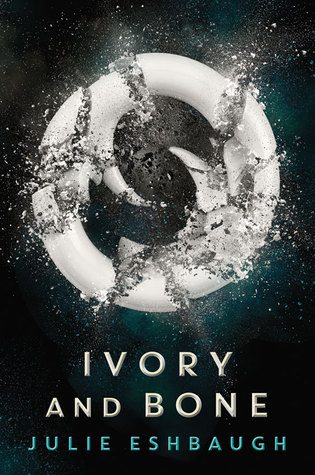
Ivory and Bone

Ivory and Bone I was lucky enough to read an ARC of Julie Eshbaugh's masterful debut. This is a book I've wanted to read since I first heard about it--a YA novel set in pre-historic era is unlike anything else I can think of in the market right now. I wasn't entirely sure what to expect going in, but that didn't seem to matter--Eshbaugh drew me in almost at once with her sharp prose and interesting characters (and she manages to pull off a second-person narration, which can be extremely hard to do).

Ivory and Bone follows Kol and his family, a pre-historic clan living on the fringes of the great ice, where they hunt mammoth and other animals for meat and furs. The world Eshbaugh describes is one of incredible beauty and incredible danger, and that tension undergirds Kol's story, as his family--already worried about the future of a clan in which there are no young women for Kol and his brothers to marry--celebrates the arrival of Mya, her sister and her brother, members of a thriving clan to the south. This arrival promises welcome alliances and friendship between the clans, but almost at once, Kol and Mya find themselves wary of one another--a hesitation that's only complicated by the arrival of still a third clan and the slow unveiling of deep-held secrets that might destroy them all.

Eshbaugh does a wonderful job of fleshing out an unusual world. Though my life is nothing like Kol's, I could understand and relate to his worries--his fears for the future and his more immediate fears of being stalked by a saber-tooth tiger--and the pleasure he takes in hunting for honey. The relationships she draws were moving and believable, and I loved the slow unfolding of Kol's friendship with Mya. As the action climaxed, I couldn't put the book down. Definitely one to read in 2016!

Sunday, May 31, 2015

Review round-up

Because of travel and more I'm woefully behind on updating my reviews. As I'm thinking of doing away with reviews in any case, except for books I really love, that may not be a bad thing. But, for my own sake as much as anything else, here are the books I've read since I've been gone . . .


Kendall Kulper, Salt and Storm: the setting was the best part of this. Rich, evocative fantasy set in the whaling world of 19th century New England (think Moby Dick, but more accessible). The language was lovely and the atmosphere perfectly drawn: but I didn't love the ending.

Kelly Fiore, Just Like in the Movies cute, not entirely convincing story of two girls who set out to change their romantic fortunes by mimicking movie scenarios.

Kasie West, The Fill-In Boyfriend. I pre-ordered this book: I was that excited to read a new Kasie West book! And while it was fun and harmless, it didn't have quite the same depth or wit as her other books.

Julie Wright, Melanie Jacobsen, Heather Moore, Boardwalks Antique Shop. This collection of three related novellas about romances along Tangerine street in a delightful SoCal town is not quite as much fun as the previous one, but these stories are fun and sweet.


Martina Boone, Compulsion:  Martina has done a lot to support the YA community (she has a great website that runs all kinds of interviews and contests that was hugely helpful to me), and I've been wanting to read her debut for some time. There was lots I loved about it: richly evocative setting in the South, an intriguing cast of characters (Barrie, her scarred--and now dead--mother, her cross-dressing guardian, Eight, and so many more), interesting mysteries about Barrie's past. But while I enjoyed reading the book, I didn't love it, and I'm not entirely sure why. Boone is a good writer, her characters well-drawn and did I say I loved the setting? But I wasn't fully drawn into the world until the end.


Jude Morgan, A Little Folly. Jude Morgan might be the next best thing to reading Georgette Heyer or Jane Austen. He's got a great ear for period language and the details are wonderful. Sometimes the narrative is a little slow, but I still really enjoyed this story about siblings Louisa and Valentine who, when their strict father dies, plan to fully enjoy life--with some unexpected consequences.

A Little Folly

Nichole Van, Intertwine. A sweet, romantic, if sometimes implausible time-travel romance that plunges the heroine into Regency era England.


Josi Kilpack, A Heart Revealed. I've read several of Kilpack's culinary mysteries and liked them but didn't love them, so I was intrigued when I saw she'd written a Regency, even more so when I heard it had starred reviews from Kirkus and Publisher's Weekly. And while the story was more of a slow burn than a fast-action piece, there was a lot I liked about it: especially the extreme humbling of the heroine after she discovers her hair is falling out. I can imagine few things more horrifying to a woman who puts all her value in her personal experience. Amber's humbling and transformation give this Regency a lot more depth than most, and the romance (while I wanted *more*!) was sweet. (And if it looks like I've been reading a lot of Regency lately, well, yes, I have. And I have lots of recommendations.)

Marie Rutkowski, The Winner's Crime. Rutkowski is one of those authors I want to be like when I grow up: her books are effortlessly plotted, well-paced, and the heroes tread that fine line between complicated and unlikeable. I adored book one (The Winner's Curse), and I was so happy to find that the sequel didn't disappoint. It's hard to say much about the book without spoilers, suffice it to say that Kestrel  has engaged herself to the Emperor's heir to save Arin and his kingdom (though of course, she can't tell Arin, and he doesn't understand why she's done it). The politics were fascinating and well-drawn, the writing was sometimes so lovely it hurt, and, of course, the romance is still smouldering.

Tuesday, January 27, 2015

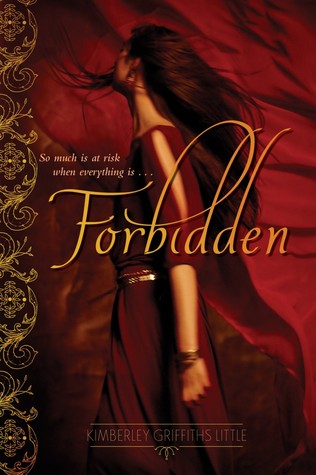
Forbidden

Forbidden (Forbidden, #1) Kimberley Griffiths Little's newest novel, Forbidden, is an unusual, evocative historical YA novel. Set in ancient Mesopotamia, the story follows 16-year-old Jayden as her family attempts to cross the desert to their winter oasis after a family tragedy. Still reeling from her loss and  anxious about the dangers of the crossing (particularly as they've been separated from the rest of their tribe), Jayden meets an unusual stranger who needs her family's help. Of course, Jayden is intrigued by the newcomer.

There's just one problem. Jayden is already betrothed. To Horeb, set to become their tribe's leader after his father's death. But Jayden doesn't like or trust Horeb, who has become increasingly shifty and cruel. Adding to this complication is her sister's growing fascination with the goddess temple to Ashtoreth, which goes against everything Jayden's mother and grandmother have taught them. As the novel progresses, Jayden has to figure out what truths are most important to her--and what she will have to sacrifice to stay true to herself.

For me, the setting (cultural and physical) of the novel was one of my favorite parts. I loved The Red Tent back when it came out, and I enjoyed revisiting a world where the women of a tribe had such a lovely, close-knit bond. Looking at some of the history behind belly dancing was also fascinating to me. Little does a nice job evoking the setting--at once harsh and beautiful. I liked, too, that Jayden's issues with her sister were realistic and complicated, how Jayden both loves her sister but struggles to understand her choices. There were a few places in the last half of the novel where the plot swirled quite quickly, and sometimes I struggled to keep pace with the twists, but I'm not sure that is a bad thing! I'm definitely looking forward to seeing how Jayden's story resolves in the rest of the series.

Monday, January 5, 2015

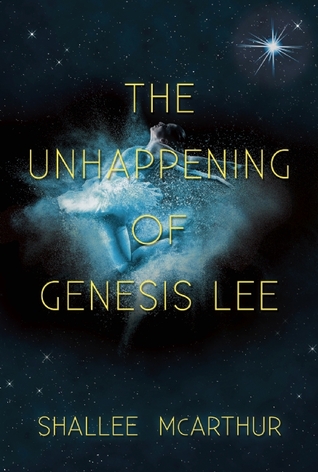
The Unhappening of Genesis Lee

 Shallee McArthur's debut novel, The Unhappening of Genesis Lee is a phenomenal book. Well written, fast-paced, intriguing characters, but best of all, a smart world view.

The Unhappening of Genesis LeeIn this near-future society, a group of people with genetically modified memories (the Mementi) have formed their own colony, which is slowly being infiltrated by regular people (Populace). Genesis Lee is Mementi, and stories all of her memories in beads. She's pretty content with her life, hanging out with friends and practicing her dance, until her best friend's memories are stolen by the Link thief who is terrorizing the Mementi population. When Gena runs into a cute Populace boy who claims to know her, but who she doesn't remember, things get serious. Because Gena has never forgotten anything. Ever. But to stop the thief, she's going to need his help.

I thought the book had a nice balance of Gena's own internal conflicts with forgetting and the external tension rising between the Mementi and Populace. The story had some cool twists, but my favorite parts were the relationships. I liked how things were complicated: her relationship with Kalan and other Populace, her relationship with her best friend (who's forgotten the last two years of their relationship), and with her family. And I was so impressed with how smart the book was--I've done some research in memory studies (mostly in terms of collective memory, rather than physiological memory), and it was clear to me that McArthur knows her stuff.

A great read for fans of light sci-fi.

Sunday, December 21, 2014

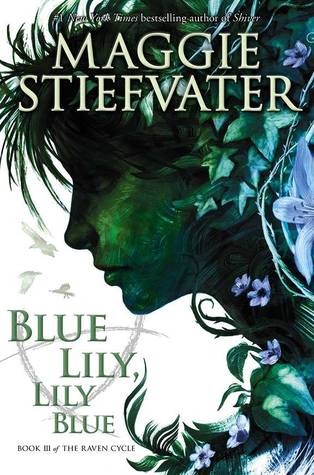
Blue Lily, Lily Blue

 I've been putting off reading Stiefvater's Blue Lily, Lily Blue until I had time to savor it (also, as a reward for meeting some personal deadlines). And it was lovely and satisfying in a lot of ways--but I don't think I can rave about it like some reviewers have.

Blue Lily, Lily Blue (The Raven Cycle, #3)In this third book of the Raven Cycle, Blue and the others are coming closer to finding (and waking) the sleepers, including the mystic King Glendower who has driven Gansey's obsessions for the last seven years. Blue's mother, Maura, has disappeared, and her disappearance may or may not be connected with the sleepers. The Gray Man's former employer, Colin Greenmantle, has shown up in town looking for the Greywaren with his wife Piper (a seriously unhinged, self-absorbed beauty). To be honest, while the plot does move forward, it also felt like it moved in some circles. Some threads get resolved here, new mysteries open up. But I don't read these books for the plot--I read for the characters and the complex world and Steifvater's exquisite writing.

What fascinates me the most about these books are the characters: I think I would read just about anything with them in them. I love that they are all fully realized, complex, complicated, and still developing. In this book, we get to see Blue stretch and change in good and painful ways, we see Adam become a little less prickly and more accepting, we see Ronan still wrestling with his nightmares and Gansey--well, Gansey is still Gansey, kingly and imperfect and trying so hard.

And this world Stiefvater has written is so vividly depicted it feels as though you've been there: I come out of her books feeling like I've woken from a particularly real dream. Though this book didn't have quite the same urgency for me as the others, I can't wait to see what Stiefvater does next: it will be lovely, heart-wrenching, and surprising, at the very least.

Monday, December 15, 2014

My True Love Gave to Me

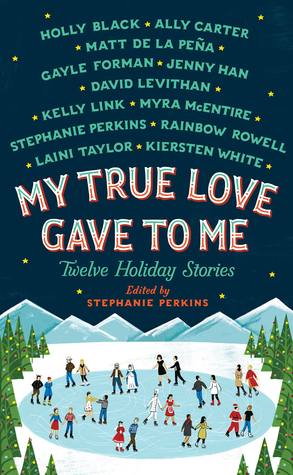
My True Love Gave to Me: Twelve Holiday Stories I've been looking forward to getting my hands on My True Love Gave to Me, a collection of holiday-themed stories written by well-known YA authors edited by Stephanie Perkins--and overall found the book delightful. Not every story in it was for me--but that's the nice thing about a collection, for every story I didn't love, there was a story that I did. Rather than describe all twelve stories, I just want to highlight my favorites. (Also, a note on the cover: the couples ice skating are the couples from the stories--it was fun to try to match the story with the image).

"Midnight" by Rainbow Rowell
I've loved everything by Rowell that I've read so far, and this story was no exception. Told in alternating flashes of time on December 31st, the story follows Mags and Noel, best friends who meet one year on Christmas Eve and build a friendship that spans high school into college. But there's a problem: Mags is hopelessly in love with Noel, who always manages to find someone else to kiss when the clock strikes midnight. I loved the voice--but mostly I loved how Rowell managed to capture that perfect, aching tension of wanting someone who doesn't want you.

"The Lady and the Fox," by Kelly Link
One of the nice surprises in this collection is that not all the stories are straight up contemporary YA--some have very definite flashes of fantasy. This was one of the latter. Miranda has spent every holiday with her glitzy godmother, one of the infamous Honeywell. When she was eleven, she first spotted him: a young man in a an eighteenth-century embroidered coat standing alone in the garden while it snows. When the snow stops, the boy vanishes. She searches for him every year, but she doesn't always see him (he only appears when it snows). I loved the romance behind the mystery--who is he? why does he only appear when it snows?--and the sort of fairy tale ending Link conjures to the story.

"Krampuslauf," by Holly Black
In characteristic style, Black takes her "holiday" inspiration from the old story of the Krampus, a creature older than the devil, the son of a Norse god. But in Fairmont, the rich people use the krampuslauf as an excuse for to raise money for charity, sanitizing the whole idea behind the festival. The main character (I've been going back through and can't find her name--it's told in first person) and her friends dress up with appropriate horns and funky attire, and in a desperate attempt to wean her friend Penny off a toxic rich boyfriend (who has another, equally rich girlfriend), they invite them to a holiday party where the plan is for Penny to confront him. But when an unexpected guest shows up at the party, all expectations are off. The party itself was meh, in my opinion, but I loved how Black dug into the underside of holiday traditions and I loved the unexpected bits of folklore and magic.

"Welcome to Christmas, CA" by Kiersten White
This story was adorable and heart-warming--the only story in the collection to actually make me cry. Maria lives in the dead-end town of Christmas, barely a blip on the already depressing landscape between Barstow and Baker, CA. She's desperate to get out of town, away from her mother whose grown more distant, and the step-father who's trying to intrude on her life. But when a new cook gets hired at the diner her mom runs, things start to change. Ben has a gift with food that starts to tie the town together and wins Maria over despite herself. What I loved about this was that so many people weren't what you expect them to be. I loved the sense of community and the overall warmth of the story. Not the most romantic of the stories, but one of the best.

"The Girl Who Woke the Dreamer," by Laini Taylor
Nor surprising that I loved this one--it has Taylor's signature lovely prose and curious unworldly creatures. Neve is an orphan, one of many girls seemingly at the mercy of the town's strange tradition: in the days leading up to Christmas, local men leave small gifts for the girl they're courting. In most cases, the girls say yes, because they are poor and they haven't other options. But Neve is being courted by the fire-and-brimstone preacher who has already buried three wives, and Neve would rather starve than marry him. But when her desperation reaches out and wakes the Dreamer nestled beneath their town, unexpected things start happening.

Monday, November 10, 2014

Stronger than You Know

Stronger Than You Know Whenever I pick up a book by an author I know, I'm both excited and hesitant (excited because--look, I know her! And hesitant because if I don't like it, I never know what to say. Usually I don't say anything). Luckily, Jolene Perry's Stronger Than You Know was lovely--a perfect mix of drama and hope.

When the novel opens, Joy is struggling with just about everything: adjusting to her new school, a new life with her aunt and uncle and cousins, talking to anyone she's not related to. Sometimes just existing.

Because Joy has just escaped from a terrible, abusive environment with a mother who almost never let her leave their tiny trailer home, and who didn't protect Joy from her boyfriends in the most basic way a mother should.

What I loved about this book was how Perry managed to make Joy wounded and believable without drowning the book in darkness--it's easy to write dark. It's less easy to write hope that doesn't dissolve into schmaltz. I loved Joy--she was vulnerable, but there was an iron core to her. She'd gone through terrible things, but she wasn't willing to let those things define her. Watching Joy come out of the trauma of her past was one of the best parts of the novel.

I also loved that Joy was surrounded by good people. So often, it's easy to create drama in books by making everyone around the hero disagreeable. But Joy's aunt and uncle are warm and loving and wonderful. Justin was great, too, as the boy who sees something in Joy she doesn't yet see herself, but who's careful to only ask for what Joy is ready to give.

Overall, a powerful book about a survivor, one that made me smile as often (or more) than it made me cry.

Monday, October 13, 2014

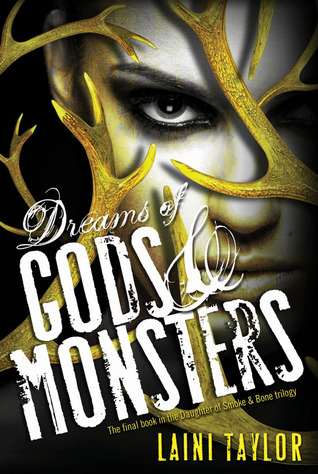
Dreams of Gods and Monsters (also a bit of Pitch Wars)

So, yeah, I get that I haven't posted in almost two weeks.

Part of that is because I was savoring Laini Taylor's Dreams of Gods and Monsters, which took me longer to get through than most of the books I read.

Also, I've been buried up to my eye-balls in Pitch Wars revisions. The revision has been a pretty big overhaul--my MS has gone from 90,000 words back up to 96,000 and down to 87,000--but in between all that I've cut almost 28,000 words and written 25,000--in three weeks. But I'm pretty excited about the way things are shaping up. I think I've fixed some of the major pacing problems in the story.

Ahem.

On to the review.

I've been a fan of Laini Taylor since her Fairies of Dreamdark series. But I didn't love Daughter of Smoke and Bone as much as I've loved her two most recent books. That's rare in a trilogy, for the later books to wow me more than the original one.

Dreams of Gods & Monsters (Daughter of Smoke & Bone, #3)In this conclusion, Karou (a chimera) and Akiva (seraphim) struggle to reconcile their warring people, prevent Jael from acquiring nuclear weapons on earth, and put an end to his cruel rule (how's that for an awkwardly half-rhymed sentence?). As if that weren't enough, Taylor also introduces a new set of characters, PhD student Eliza who has (she thinks) put her family's crazy cultish history behind her, and a race of seraphim whose duty it is to protect Eretz from some unnamed threat.

As always, the stakes are high. And Taylor's prose is breath-taking. Heart-breaking.

I thought she did a terrific job of working together several very complex plotlines and keeping the pace moving forward. I was confused for a little while in the middle, but I was invested in the characters and kept reading anyway.

And if the end seemed a little drawn out and indulgent, well, Akiva and Karou earned it.

Monday, September 8, 2014

Paper Valentine

Paper Valentine I admit it, I picked Brenna Yovanoff's Paper Valentine up for it's lovely cover, and the blurbs on the back induced me to read more. (And now that I know she's Maggie Stiefvater's critique partner, I'm even more swayed by the book).

I thought this was a lovely, creepy sort of romance. Hannah's life in quiet Ludlow has taken quite a turn: she's haunted by the ghost of her best friend Lilly, who starved herself to death six months ago. And then there's the incessant heat, and the strange disease that's killing local birds. To add to the uneasy ambience, someone has started killing girls in town and leaving paper valentines by their bodies--and only Hannah and Lilly seem to have noticed the connection. Hannah's otherworldly connection to Lilly seems to make her more receptive to other ghosts as well, and soon it seems that if Hannah doesn't stop the killer, she might be the next victim.

I thought the writing was spare and lovely, the characters interesting, and the pacing good. I really enjoyed the book, but it's probably not one I'd go back and re-read.

Tuesday, July 29, 2014

Red Rising

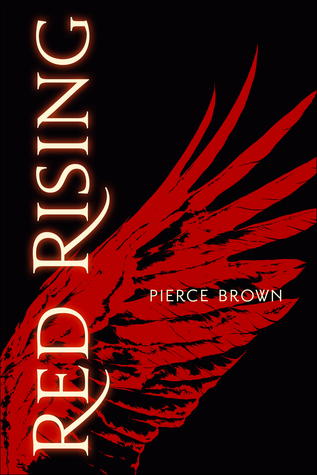
Red Rising (Red Rising Trilogy, #1) Lots of books have been compared to The Hunger Games--by publicists, by wanna-be-writers, publishers, and more.

Most of them don't live up to the hype.

This one, with a cover blurb bravely comparing the hero to Ender Wiggins and Katniss, actually does.

It's a frenetic, wild, violent read. I thought about it when I wasn't reading, and when I was reading, I stopped only reluctantly.

In a futuristic society, where one's future is determined by one's caste, Darrow is a red, the lowest of the low. His people mine underneath the surface of Mars, searching for a mineral that will help terraform the planet and make it habitable--they are told--for the other color castes seeking refuge from earth.

At sixteen, Darrow is already married and a man--a helldiver for his Lykos clan. He dreams of revolution, as his father did, but mostly he just works and lives as hard as he can. Reds don't tend to live long.

But when the unthinkable happens and Darrow loses nearly everything he cares for, his dreams change. He's given a mission by a secret society: infiltrate the Golds, the highest of the castes. With some surgical assistance, Darrow is transformed: his face, his body, his eyes, even his brain.

Darrow manages to make it into the Institute, where the ruling Golds are made Peerless (scarred warriors who are strong, ruthless, and committed to maintaining their power). And there, everything starts changing.

For starters, there's the passage--a bizarre, horrible Darwinian rite of passage. (This book is not for the faint-hearted. Or the very young. While it's rated YA for the protagonist's age, it's definitely violent).

Then there's the Institute's war games, where Darrow and forty-nine others are drafted into house Mars and have to compete against 11 other houses (all based on Roman gods). The resulting rivalries are no-holds barred fighting, meant to teach the students how to fight, how to cheat, how to survive--and how to become leaders.

Darrow fails. A lot. He makes stupid mistakes. A lot. But, impressively, he grows.

So often novels like this are focused on the plot and world-building--but Darrow, despite his impressive intelligence and physical skills, is not perfect. His character arc in the novel was painful, heart-wrenching, but felt believable.

Of course, not everything in the novel was believable. (For one, why is it that none of the Gold children knew what the Passage was? Presumably, the leaders have made it through. Also presumably, they would have told their children what to expect--or at least made sure they could survive it.)

But the plot and characters kept surprising me, and I raced through the book.

By the end, I'll admit, I was a little tired of the violence. But I think that's part of the point: the cost of maintaining a hugely unequal class society. And the cost of absolute power.

Definitely worth-reading--particularly for fans of The Hunger Games, Ender's Game, John Scalzi's Old Man's War and other sci-fi/dystopian rebellions.

Tuesday, July 22, 2014

The One

The One (The Selection, #3) When I first picked up the Selection a couple of years ago, I was intrigued. I'm tired of grim dystopians--The Selection, with its premise of the Bachelor meets the Hunger Games (minus the violence) in a futuristic America, sounded like fun. And in a lot of ways, the series has been. There have been pretty dresses, swoony kisses, girl fights (and friendships) set against a vaguely revolutionary backdrop.

But it's also been like riding an emotional rollercoaster. In The Selection, America is one of thirty-five finalists. She's there only reluctantly, because her heart was given to Aspen, but her family convinces her to take a chance at becoming queen. Then, of course, she starts to fall for Maxon, the prince charming. And Aspen shows up as a guard at the palace, further complicating matters. The on-again-off-again that resulted from American trying to decide between Aspen and Maxon in book two (The Elite) drove me nuts.

Here, America has made it to the final four. The pressure of northern and southern rebels on the monarchy is heating up, and America and Maxon are struggling as much as ever to understand each other, despite their evident attraction.

I don't know. I'm clearly not the target audience for this book, and maybe I'm too old and too cynical. But I got tired of Maxon and America's misunderstandings (why couldn't she just tell him how she felt? Why did she lie to him about Aspen for so long?). And the revolutionary threats didn't feel very real to me--I would have loved to see more development of the political side of things.

I will give Cass credit, though, for moving past the typical girl rivalry in this novel and trying to show how friendships develop in the most unusual of places. But I ultimately wasn't convinced by how easily things were resolved for the characters.


Wednesday, July 9, 2014

Timebound

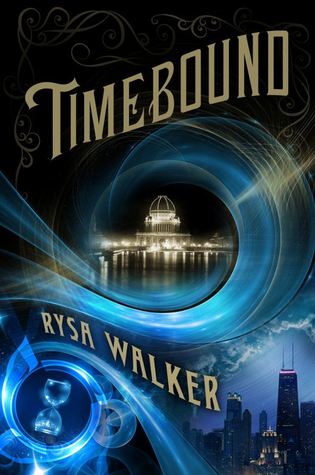
Timebound (The Chronos Files, #1) I got a copy of Timebound, by Risa Walker, as part of the Amazon First promotion a few months ago, but it's taken a while to work through my TBR list . . . The premise was intriguing: sixteen-year-old Kate Pierce-Keller discovers that she belongs to a family whose genetic makeup allows them to travel through time (as a point of fact, her grandmother was born over a century *after* she was). Kate's understandably skeptical--until someone begins manipulating her timeline and making changes in the past that threaten her own existence.

The plot for this novel is fairly complex, as it involves not only the changing timeline, but a religious group, the Cyrists, who are linked to the chronological changes and gain increasing power in each new iteration of the timeline. Figuring out how the two are linked is part of the mystery driving the novel.

And of course, there's the romantic angle, starting with a handsome young man (Kiernan) who kisses her on the subway and disappears--and who lived nearly a century before Kate. And then there's the very present Trey, who becomes Kate's only friend as her timeline shifts. However, Trey presents Kate with a problem: if she fixes the changes in her timeline, Trey will no longer know who she is, he'll have no memory of their relationship. I thought the triangle actually worked here--I liked both men (though the fact that she met Kiernan as a young boy and found herself attracted to him only a short time later when she met him again as a teen skeeved me out a little), and I'd probably read the next installment just to see who she winds up with.

I found the plot pretty fascinating--if at times hard to keep straight (although I think that was more on my end than the writer's, who seemed to work hard to keep things clear). I also loved the historical element of the Chicago World Fair in 1893: the historical details added a lot to the book. (However, I do have to note that it's not entirely historically accurate: the Seneca Falls Women's convention was in 1848, not 1838).

The characters were a little harder for me: at the end, I'm still not sure I have a good grasp on Kate herself, other than that she's a typical teenager who likes onion rings and knows martial arts. This might be an inevitable consequence of a plot-heavy book.

Monday, July 7, 2014

Cress

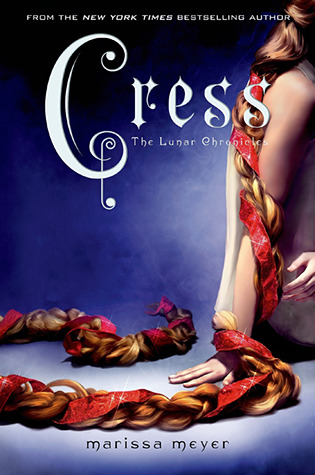
Marissa Meyer's Cress, as almost everyone who reads YA is aware, is the third book of her Lunar Chronicles, futuristic retelling of well-known fairy tales. I loved Cinder (who doesn't like a cyborg version of Cinderella?), enjoyed Scarlet, but I have mixed-feelings about Cress (which apparently puts me in a minority).

Cress (The Lunar Chronicles, #3)Don't get me wrong. I'm still attached enough to characters that I will undoubtedly read the rest of the series. But Cress felt uneven to me--sometimes fast-paced, but sometimes dragging. And while I like all the characters, here Meyer tries to cover so many perspectives that a few of the characters (Wolf and Scarlet, for instance), feel a little flat and/or don't have enough to do. It also seems a little *too* convenient that each of the title characters has a ready-to-hand love interest. I guess that's part of the fairy tale retelling, but I would have liked to feel a little more surprise.

I did like that Cress wasn't quite as kick-ass as Cinder and Scarlett--this felt realistic given that, as a Lunar Shell (lacking the characteristic Lunar glamor), she's grown up trapped on a space ship orbiting earth and lacked the opportunities to develop the kind of toughness the other characters have. That said, she has her own strengths, and I liked that she was able to use her hacking skills to help the others. I also like the way the stakes continue to build in the series, as Cinder and the others try to force the Lunar queen Levana out of office and save the world. I like it--I just didn't love it this time around.

Thursday, May 29, 2014

Curtsies and Conspiracies

Curtsies and ConspiraciesI've loved Gail Carriger's books since discovering her Parasol Protectorate Series a couple of years ago. Curtsies and Conspiracies is set in the same world as PP, though a quarter century earlier, with young adult characters. But some favorites from PP make an appearance (I was particularly happy to see Lord Akeldama in this one), and of course, her signature mix of steampunk, supernatural creatures, and Victorian England is always wild fun.

I remember being underwhelmed by the first book in this series (Etiquette and Espionage), so I was surprised and pleased to find myself enjoying Curtsies and Conspiracies. Maybe it was that my expectations weren't set very high: I expected to be entertained, and I was.

Gail Carriger's writing style is delightful: her characters, if shallow, are funny and witty and I love the very Victorianness of the whole thing. The plot tends to be convoluted: after rescuing a top-secret gadget in book I, here Sophronia and her friends are trying to demonstrate their increasing adeptness at spy-stuff and Sophronia stumbles across some kind of plot to kidnap her friend Dimity for unknown reasons. These attempts seem somehow tied to the growing interest in a new kind of air-dirigible and the potential for vampires to travel higher in the aether . . . I have to admit that I'm not entirely clear on the details, but that didn't seem to matter. What really interested me here were the domestic details: how Sophronia sees possible conspiracies in every-day situations, how even tea-time can be a dramatic event, etc. I didn't mind the growing love triangle between Sophronia, her sootie friend Soap, and Lord Felix, because Sophronia generally remained oblivious to both of them.

The ending was a little bizarre, but I'll definitely pick up the next book.

Wednesday, April 23, 2014

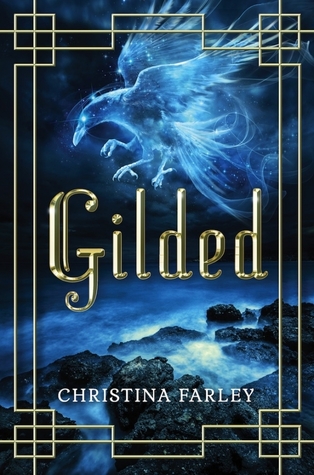
Gilded

Christina Farley, Gilded

Gilded (Gilded, #1)I picked up this book a couple of months ago (part of the Amazon First program) and, now that I'm done frantically trying to finish the Whitney Award books, I finally had time to read it.

Jae Hwa is a sixteen-year-old Korean American girl living in Seoul, Korea, for the first time as her father has transferred to a new position and both he and Jae are still recovering from the death of her mother. But not long into their stay, strange things begin happening. Jae sees creatures out of Korean folklore, and her grandfather hints at a centuries-old curse plaguing her family: namely, as revenge for his rejection by Princess Juwha, the demon Haemosu has been stealing away the oldest young woman in each generation.

This just happens to be Jae. And despite her martial arts skills, this is one battle that Jae can't win alone.

I have really mixed feelings about this book. I love mythologically-based fantasy (both historical and contemporary), and Farley includes some lovely, rich details of Korean mythology. The setting, too, was wonderful: nice details and evocative images. But I struggled to warm to Jae, who often does stupid and impetuous things just because she can (and I know that lots of teenagers are impetuous, but Jae seems dangerously so sometimes). And, as other reviewers have pointed out, it seems a little problematic that in a story centered around Korean mythology and culture, Jae's love interest is an American guy, and his American parents are often the key to her solving the mysteries that face her.

That said, I'm not sorry I read it--I learned a lot of cool stuff about Korean mythology and the plot moved quickly enough that I was never bored (although annoyed, sometimes, yes).

Friday, March 28, 2014

Diamonds and Deceit

Diamonds and Deceit (At Somerton, #2) Leila Rasheed's Diamonds and Deceit is the sequel to Cinders and Sapphires and is every bit as frothy, drama-laden, and fun as its predecessor (and yes, reminiscent of its Downton Abbey comparisons).

In this book, the season is in full swing. Ada struggles to contain her misgivings about her engagement to the seemingly perfect Lord Fintan--who has promised her an Oxford education as part of their marriage deal. And yet, Ada doesn't feel anything for him like she did for her first love. There's also the not-insignificant detail that Ada's new stepsister Charlotte is in love with Lord Fintan.

Rose, the former housemaid elevated to lady, struggles with the backbiting and unkindness of other debutantes, even as she manages to snare the interest of one of the season's most eligible--if unpredictable--bachelors, Lord Alexander Ross.

And back home at Somerton, the putative heir William is going through money at an astounding rate while also harassing his young son's nurse, Priya. And Ada's stepbrother Sebastian grieves that his former valet/lover Oliver is in jail for a crime he didn't commit.

So--lots of drama, no? Very Downtonesque. Throw in pretty girls, parties, lovely dress descriptions and you have this novel. It's reasonably well-written and fast-paced and a fun brain-candy read. There are a lot of side stories and I wasn't equally invested in all of them--and I felt like the ending wrapped things up a bit too neatly. (Though I'm sure if there's a sequel I will read that too . . .)