Monday, December 29, 2014

Brown Girl Dreaming

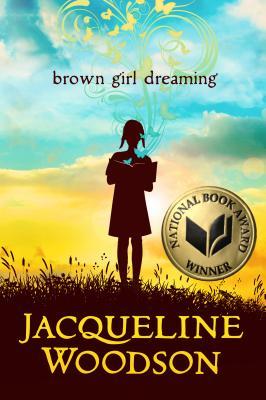
Brown Girl Dreaming I'm embarrassed to admit that Jacqueline Woodson's Brown Girl Dreaming wasn't on my radar until the National Book Awards--but having read it, I think it fully deserves the recognition and wish I'd heard about it earlier.

In lovely, accessible free verse, Woodson recounts a childhood in three places: Ohio, South Carolina, and New York. She paints a vivid, moving picture of each place and the friends and family that made up her life. The story is engaging on so many levels: Woodson's struggles with literacy (and school in general) and her passionate fascination with words. The emerging civil rights movement and how it affected her and her family. A glimpse into her life as a Jehovah's Witness, which complicates in interesting ways our cultural assumptions about what it means to grow up black in the South.

The book was a relatively quick read, but so compelling: I rooted for the young Jackie and I think her story is an important one, both for the personal relationships it explores and for what it adds to the national dialogues about Civil Rights era history.

Wednesday, December 24, 2014

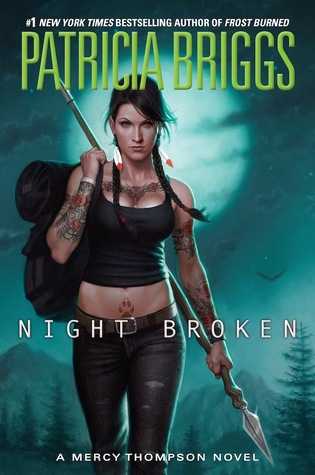
Night Broken

 Patricia Briggs' Mercy Thompson series is one of the few urban fantasy series I'm still reading--and this newest installment, Night Broken, is a terrific addition. So many series seem to get tired part way through: the plotline becomes familiar, the characters have begun recycling arcs, etc. But Briggs managed to make this one feel fresh, in part by introducing a familiar sort of conflict: the ex.

Night Broken (Mercy Thompson, #8)Adam's ex-wife Christy has managed to get herself into trouble--she's got a stalker who may have killed at least one other person, and so she comes fleeing home to the protection of Adam and his werewolves. She doesn't, however, tell them the most important bits: her stalker probably isn't human--and she wants Adam back. Christy is a first-class manipulator, and within minutes of returning she's got most of the pack eating out of her hands--and making it so that if Mercy protests, it's Mercy, not Christy, who looks bad. More interested in the pack harmony than her own ego, Mercy bites her tongue--and then does her damnedest to get rid of Christy's stalker.

Only, of course, the stalker is something out of legend, something that Mercy and the wolves may not be able to stop without still more supernatural aid. Coyote makes an appearance (things always get interesting when he shows up), along with an unexpected half-sibling of Mercy's. And while the primary plot around Christy's stalker is fascinating, disturbing, and dark, that wasn't my favorite part of the story. As always, it's about the characters. Although some readers don't like Mercy's tame reaction to Christy, I found her wrestle all the more compelling because she didn't stoop to Christy's level. And I loved seeing Mercy's world expanding in uncomfortable and unexpected ways, not only with the appearance of a new sibling, but with new dynamics unfolding in the pack.

I also love the setting, since many of my extended family live in Eastern Washington. At one point, Mercy travels to Connell, a tiny city most people have never heard of--but my mom went to high school there.
I didn't love the ending, which wrapped up a little too easily (I thought), but the dilemmas Mercy faces here are very real, as are the questions the book raises about the nature and requirements of family bonds.

Sunday, December 21, 2014

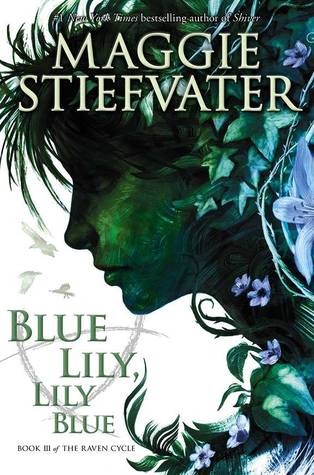
Blue Lily, Lily Blue

 I've been putting off reading Stiefvater's Blue Lily, Lily Blue until I had time to savor it (also, as a reward for meeting some personal deadlines). And it was lovely and satisfying in a lot of ways--but I don't think I can rave about it like some reviewers have.

Blue Lily, Lily Blue (The Raven Cycle, #3)In this third book of the Raven Cycle, Blue and the others are coming closer to finding (and waking) the sleepers, including the mystic King Glendower who has driven Gansey's obsessions for the last seven years. Blue's mother, Maura, has disappeared, and her disappearance may or may not be connected with the sleepers. The Gray Man's former employer, Colin Greenmantle, has shown up in town looking for the Greywaren with his wife Piper (a seriously unhinged, self-absorbed beauty). To be honest, while the plot does move forward, it also felt like it moved in some circles. Some threads get resolved here, new mysteries open up. But I don't read these books for the plot--I read for the characters and the complex world and Steifvater's exquisite writing.

What fascinates me the most about these books are the characters: I think I would read just about anything with them in them. I love that they are all fully realized, complex, complicated, and still developing. In this book, we get to see Blue stretch and change in good and painful ways, we see Adam become a little less prickly and more accepting, we see Ronan still wrestling with his nightmares and Gansey--well, Gansey is still Gansey, kingly and imperfect and trying so hard.

And this world Stiefvater has written is so vividly depicted it feels as though you've been there: I come out of her books feeling like I've woken from a particularly real dream. Though this book didn't have quite the same urgency for me as the others, I can't wait to see what Stiefvater does next: it will be lovely, heart-wrenching, and surprising, at the very least.

Thursday, December 18, 2014

Fish Out of Water

Fish Out of WaterThere were a lot of things I enjoyed about Natalie Whipple's Fish Out of Water. (I was given an eARC in exchange for an honest review). Like her other books, this is clever and clearly written.

Mika's looking forward to her summer vacation, days spent working at the pet shop (which she actually enjoys), working with her parents on their marine research, and building elaborate sand sculptures with her friend Shreya.

But two things happen, almost on top of each other, that upend her plans. Her manager hires his nephew Dylan, a spoiled rich kid who's at odds with his parents, and training him is a real downer. Then she goes home to find a crazy old lady ranting hateful, racist things about her neighborhood and her family--only to discover the woman is her grandmother, who suffers from Alzheimer's. Between learning to care for her grandmother and coming to better understand Dylan, Mika finds her heart stretched in ways she didn't think possible.

I thought Whipple did a nice job with Mika: she's smart (I loved how much she knew about fish) and she's loyal. I thought the prickly interplay with her grandmother was spot on--I also had a grandmother who was hard for lots of people to deal with, so I know what it's like to love someone  you're not entirely sure you like. And I liked that Mika's friendships felt real: complicated and warm and sometimes unpredictable. I loved, too, the theme of second chances: that people could do hard, terrible things, but that wasn't the end of hope for them. The book seems to suggest that people can change--but more importantly, we can change how we approach people we struggle with.

There were some things I struggled with though: I never quite bought Dylan's change of heart--he did something fairly horrific before coming into Mika's life, and Mika is rightly horrified when she finds out. But then she finds herself falling for him without really making him account for what happened. There's also a subplot involving one of her friends getting kicked out by her parents--and while the subplot underscores the theme of dealing with racism/prejudice in our families, it also felt a little unnecessary. The book had plenty of complexity without introducing the subplot, I thought. Finally, Whipple did a little bit too good a job making Mika's grandmother hateful. I felt sorry for her and her Alzheimer's and the way she'd let prejudice destroy her life, but I never actually liked her, so it was hard for some of the scenes to have the same emotional resonance for me.

That said, I think it's worth reading: I think it's a thoughtful, clear-eyed look at the complexity of our relationships when we love (as we always do) imperfect people.

Monday, December 15, 2014

My True Love Gave to Me

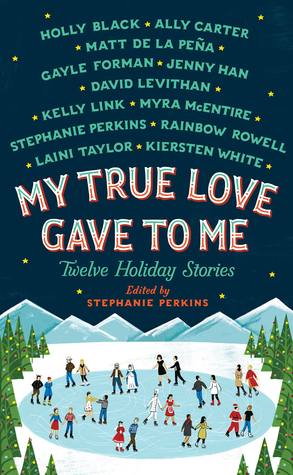
My True Love Gave to Me: Twelve Holiday Stories I've been looking forward to getting my hands on My True Love Gave to Me, a collection of holiday-themed stories written by well-known YA authors edited by Stephanie Perkins--and overall found the book delightful. Not every story in it was for me--but that's the nice thing about a collection, for every story I didn't love, there was a story that I did. Rather than describe all twelve stories, I just want to highlight my favorites. (Also, a note on the cover: the couples ice skating are the couples from the stories--it was fun to try to match the story with the image).

"Midnight" by Rainbow Rowell
I've loved everything by Rowell that I've read so far, and this story was no exception. Told in alternating flashes of time on December 31st, the story follows Mags and Noel, best friends who meet one year on Christmas Eve and build a friendship that spans high school into college. But there's a problem: Mags is hopelessly in love with Noel, who always manages to find someone else to kiss when the clock strikes midnight. I loved the voice--but mostly I loved how Rowell managed to capture that perfect, aching tension of wanting someone who doesn't want you.

"The Lady and the Fox," by Kelly Link
One of the nice surprises in this collection is that not all the stories are straight up contemporary YA--some have very definite flashes of fantasy. This was one of the latter. Miranda has spent every holiday with her glitzy godmother, one of the infamous Honeywell. When she was eleven, she first spotted him: a young man in a an eighteenth-century embroidered coat standing alone in the garden while it snows. When the snow stops, the boy vanishes. She searches for him every year, but she doesn't always see him (he only appears when it snows). I loved the romance behind the mystery--who is he? why does he only appear when it snows?--and the sort of fairy tale ending Link conjures to the story.

"Krampuslauf," by Holly Black
In characteristic style, Black takes her "holiday" inspiration from the old story of the Krampus, a creature older than the devil, the son of a Norse god. But in Fairmont, the rich people use the krampuslauf as an excuse for to raise money for charity, sanitizing the whole idea behind the festival. The main character (I've been going back through and can't find her name--it's told in first person) and her friends dress up with appropriate horns and funky attire, and in a desperate attempt to wean her friend Penny off a toxic rich boyfriend (who has another, equally rich girlfriend), they invite them to a holiday party where the plan is for Penny to confront him. But when an unexpected guest shows up at the party, all expectations are off. The party itself was meh, in my opinion, but I loved how Black dug into the underside of holiday traditions and I loved the unexpected bits of folklore and magic.

"Welcome to Christmas, CA" by Kiersten White
This story was adorable and heart-warming--the only story in the collection to actually make me cry. Maria lives in the dead-end town of Christmas, barely a blip on the already depressing landscape between Barstow and Baker, CA. She's desperate to get out of town, away from her mother whose grown more distant, and the step-father who's trying to intrude on her life. But when a new cook gets hired at the diner her mom runs, things start to change. Ben has a gift with food that starts to tie the town together and wins Maria over despite herself. What I loved about this was that so many people weren't what you expect them to be. I loved the sense of community and the overall warmth of the story. Not the most romantic of the stories, but one of the best.

"The Girl Who Woke the Dreamer," by Laini Taylor
Nor surprising that I loved this one--it has Taylor's signature lovely prose and curious unworldly creatures. Neve is an orphan, one of many girls seemingly at the mercy of the town's strange tradition: in the days leading up to Christmas, local men leave small gifts for the girl they're courting. In most cases, the girls say yes, because they are poor and they haven't other options. But Neve is being courted by the fire-and-brimstone preacher who has already buried three wives, and Neve would rather starve than marry him. But when her desperation reaches out and wakes the Dreamer nestled beneath their town, unexpected things start happening.
Thursday, December 11, 2014

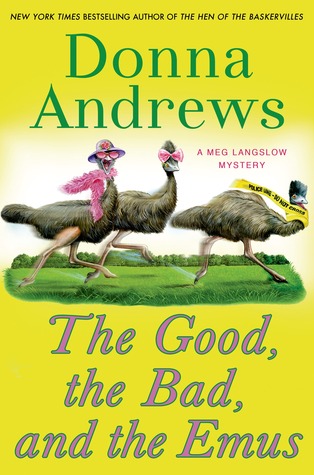
The Good, The Bad, and the Emus

The Good, the Bad, and the Emus (Meg Lanslow, #17) I think I enjoyed Meg's 17th adventure a little more than the previous one, though this still isn't quite up to par with some of the first books. What elevates this one is a new concern for complicated family relationships: Meg's grandfather has hired a PI to find Meg's grandmother (they lost touch while he was doing research in Ecuador). The PI succeeds--only to find that Meg's grandmother has been murdered a few months previously. He agrees to investigate further, and solicits Meg's help dealing with the reclusive cousin who lived with her grandmother.

At the same time, her grandfather decides to act on the feral emu problem in rural Virginia, rounding up a crew to capture the emus and move them to a wildlife sanctuary. While the effort is earnest, it serves as the ideal cover for Meg's exploration. But when someone attempts to poison her grandfather *and* the reclusive cousin, Annabelle, Meg begins to think that just maybe the two cases are somehow connected.

There was a lot I liked about this novel: Andrews' light touch with humor, interesting new characters (esp. Annabelle), and the new wrinkle in Meg's family life. I figured out both the major plot twist and the murderer, but that didn't necessarily diminish my enjoyment (I liked being right).

What I didn't love: I fell in love with Michael in the first two books when Meg did, and I feel like he's been relegated to a babysitter in the last couple of books since the birth of their twins. I realize that there wasn't a huge place for him in the story, but I miss their interactions. And the twins themselves--I can't figure out how they're so bright, and yet their diction isn't much better than my 2 year old's. It's not an egregious problem, but it does pull me out of the story a little every time it happens.

Wednesday, December 10, 2014

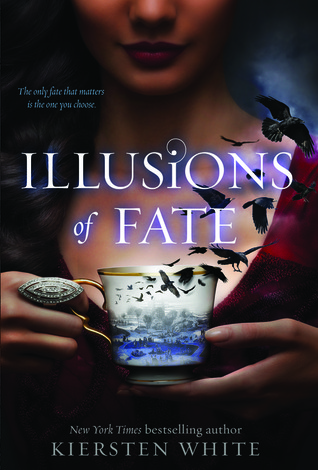
Illusions of Fate

Illusions of Fate I am a sucker for historical fantasy (not a surprise, since I write this stuff), and I've wanted to read this book since I heard of it. Kiersten White has been a little hit and miss for me, but luckily, this was more along the lines of her lovely In the Shadows. While it's not technically "historical," it's set in a world clearly reminiscent to ours, with Albion standing in for England. The heroine, Jessamin, is the daughter of an Albion by way of the colonies, come to Albion to study. (This particular angle of her world doesn't get fully developed, by the way).

But she quickly gets embroiled with the delightful Finn, drawn first to his sparkling hair, and later to his wit. He's being threatened by the enigmatic Lord Downpike, and soon Jessamin finds herself under attack as well, using her wits to save herself and the boy s he's rapidly coming to love.

I loved the world here--the world-building had a light touch, but I enjoyed it. And the bits of darkness in the story and the prose were lovely. I liked Jessamin's growing relationship with Finn. I felt like some of the magic wasn't completely explained and the story itself wrapped up quickly, but for a quick, engrossing, light read, this works perfectly.