Tuesday, June 30, 2015

YA historical fantasy, part one: nineteenth-century British

I think it's a pretty open secret that I love historical fantasy, particularly in YA. After all, my book, THE BLOOD ROSE REBELLION, is historical fantasy.

Though there is a little bit of disagreement on the definition (some maintain historical fantasy is anything that seems as if it could have happened in our world), most of the time, historical fantasy is set firmly in our historical world, with magic. What I particularly love is that it combines the kind of historical detail I adore, with creative glimpses at what our world might look like if things were different.

Especially if, say, there was magic.

As a writer, I love historical fantasy because some of the world-building has been done for me (and I enjoy the rabbit hole that is historical research: I'm currently reading the correspondence between the British ambassador in Vienna in 1848 and Prime Minister Palmerston. Sounds boring, but there are some fascinating tid-bits about how the British viewed the Hungarian conflict I'm writing about). But I also love the freedom to explore "what ifs"--what if social prestige depended on magic? And what if that magic were controlled by a strict society? What if minority groups contravened those rules? And so on.

I'm currently making a list of historical fantasy--as a genre, I'd love to better understand its history. I'm not  ready to write the history of the genre, but I thought I'd share some of my favorite YA historical fantasy, set in nineteenth-century Britain.

Patricia Wrede, MAIRELON THE MAGICIAN, SORCERY AND CECILIA

A Matter of Magic (Mairelon, #1-2) Patricia Wrede's books were some of my first exposure to historical fantasy. I think I read Mairelon the Magician, about a regency-era wizard who adopts a young thief, so many times that the cover nearly came off.

 Sorcery and Cecilia is equally delightful (co-written with Caroline Stevermer): a series of letters between cousins Kate, in London for her season, and Cecilia, sequestered at home. Quite accidentally, they stumble into a heinous magical plot, and hijinks ensue.
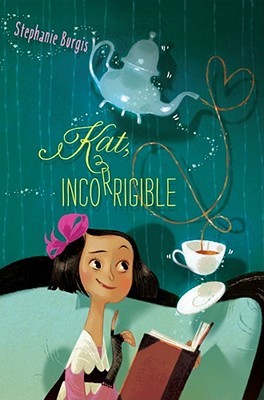


Kat, Incorrigible (Kat, Incorrigible, #1)Stephanie Burgis, KAT, INCORRIGIBLE

Stephanie Burgis' delightful middle grade series isn't technically YA, but they have the signature combination of wit, warmth, Regency era and magic that I love. Kat is a fledgling magician who has to use her powers to save her family from magical plots and ne'er-do-wells. The book has magic, romance, highwayman, and sinister villains. What more could you want?


Kiersten White, ILLUSIONS OF FATE
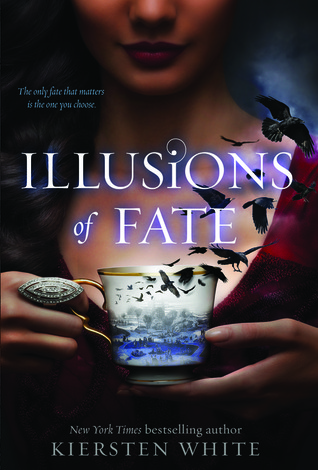
Illusions of Fate While it's not technically "historical," it's set in a world clearly reminiscent to ours, with Albion standing in for England. The heroine, Jessamin, is the daughter of an Albion by way of the colonies, come to Albion to study.

But she quickly gets embroiled with the delightful Finn, drawn first to his sparkling hair, and later to his wit. He's being threatened by the enigmatic Lord Downpike, and soon Jessamin finds herself under attack as well, using her wits to save herself and the boy she's rapidly coming to love. Charming, atmospheric, and a quick read, this is great book to dip your toes in historical fantasy.


Libba Bray, A GREAT AND TERRIBLE BEAUTY

A Great and Terrible Beauty (Gemma Doyle, #1) I admit it: I bought this book initially because of it's cover. Luckily, it was much more than that. Bray's A Great and Terrible Beauty is exactly what the title implies: beautiful and perilous at the same time. Following her mother's death, Gemma Doyle is sent to boarding school in England at Spence Academy, a strict school with a mysterious burnt wing. There, Gemma is drawn into a set of girls with some dark secrets. The girls find their way into a dark, magical world through Gemma's visions, and set out on a path of destruction none of them could have foreseen. The book is much darker than the others on the list, the characters are often not likeable, but there's something powerful in that combination.


Garth Nix, NEWT'S EMERALD

Newt's Emerald This romp of a book--on the eve of her debut into society, Truthful Newington's emerald necklace, a powerful family heirloom, is stolen. To find the emerald, Truthful assumes the identity of a boy and faces off against unexpectedly powerful opponents. The book reminded me a lot of Sorcery and Cecilia (light, frothy, fun take on Regency-era England). It was more-or-less self-published originally, but Harper Collins has picked it up and it will be re-released this fall.


[Edited to add] Franny Billingsly, CHIME

ChimeChime was a National Book Award finalist in 2011 (you may recall the whole mix-up where it was announced and then recanted that Lauren Myr's Shine was a finalist, instead of Billingsly). Set in an alternate nineteenth-century/early twentieth-century English countryside, Chime is a lyrical, atmospheric story of two sisters. Briony has a secret: she's a witch, in a community that still hangs witches if the Chime Child judges them guilty of witchcraft. Briony knows she's a witch because she feels herself implicated in the death of her stepmother, and in her twin sister Rose's strange, child-like condition. Briony is mostly okay with being an outsider in her village, her sister's permanent care-taker, and her father's responsible daughter--that is, until a young man named Eldric takes up residence in the parsonage with them, and suddenly Briony finds herself wanting things she's never wanted before. At the same time, she finds herself negotiating with the inhabitants of the swamp, like the Boggy Man, to try and cure her sister Rose of the swamp sickness that has killed so many of the village children. 

The Hollow Kingdom (The Hollow Kingdom Trilogy, #1)[Edited to add] Clare Dunkel, THE HOLLOW KINGDOM

I don't know how I forgot this one: this dark, charming, goblin-filled story about two girls drawn in by a goblin king in search of a bride to save his kingdom captures a wonderful fairy-tale quality. The romance was heart-wrenching and lovely and if the story meandered for a little in the middle, I adored the characters enough to make the journey worthwhile.


What are some of your favorite historical fantasy books? (I've got Elizabeth May's The Falconer and Robin LeFevers' Dark Assassin books on my TBR list . . .).

Sunday, June 14, 2015

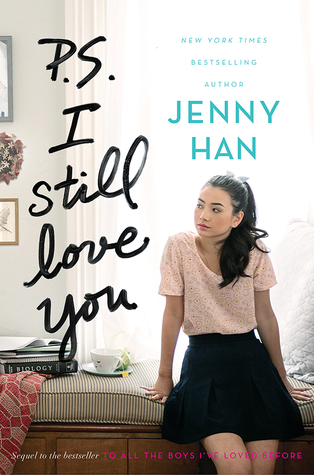
p.s. I still love you

Jenny Han is a genius at writing character: Shug is one of the best middle-grade books I've read, and To All the Boys I've Loved Before was simply darling. I didn't mind the "cliff-hanger" ending some people objected to--to me it was less cliff-hanger and more real-world messy. But I loved Lara Jean's sweetness (and yes, naivety. Some girls are naive at sixteen. I was one of them).
P.S. I Still Love You (To All the Boys I've Loved Before, #2)
Luckily, there is a sequel that picks up Lara Jean and Peter Kravinsky's relationship almost exactly where book one ended. Of course, there are complications--namely, the fact that Peter keeps being seen with his ex-girlfriend Gen, who he claims is going through hard times (though Lara Jean has seen nothing to prove that). And the not-insignificant fact that the only boy who didn't return her letter from book one starts writing back to her--and they might have more of a connection than Lara Jean realized.

I know love triangles get a bad rap (and sometimes deservedly so), but I think there's a place for them. I remember that feeling of having multiple possibilities, of not being quite sure where my heart really belonged. And both of the boys here are charming for very different reasons--they're not just in the story to increase the drama.

Another thing I really appreciated about the book was it's take on sex: so many YA books seem to either not really address it, or the main characters are all over it. Which, I get: some teens are like that. But there are a lot of teenagers who aren't sure, or even ready for sex. And I loved that Han addressed that openly in Lara Jean's own conflicted feelings (dating someone who's much more experienced while still realizing she may not be ready yet). 

I also loved the perfectly evoked bitter-sweet feel of childhood relationships evolving.

Sunday, June 7, 2015

The novelist as tourist: visiting the sites of my book!

As I mentioned earlier, I spent the first part of may in Hungary, retracing some of the sites that figure in my upcoming debut, THE BLOOD ROSE REBELLION.

One of the most thrilling things for me, aside from simply being back in a land that I love, was finding missing pieces in my research--like realizing the current Buda castle is three times the size of the castle that would have stood there in 1848. (This block, below, is essentially the only part of the castle that existed then--not the gaudy dome that everyone knows from pictures of the city).


But there were other discoveries that thrilled me because most tourists had no idea of their significance.

Like finding the Karolyi palace, where Karolina Karolyi (an ardent patriot who makes a cameo appearance in my book) lives.


Or Cafe Pilvax, where the young men of March planned their revolution (though the current incarnation looks nothing like the pictures I've seen). It was just around the corner from our apartment.


Or this: this lovely building is the Vigado, some kind of music hall. But it was significant to me because it was one of those aha! research moments. I'd been trying to find out where the Redoute was, a public ballroom used frequently in 19th century Budapest. In a local guidebook our host left in the apartment, I discovered why I couldn't find the ballroom. The original building had been destroyed by canon fire during the 1849 siege of Budapest: this was built on the site.


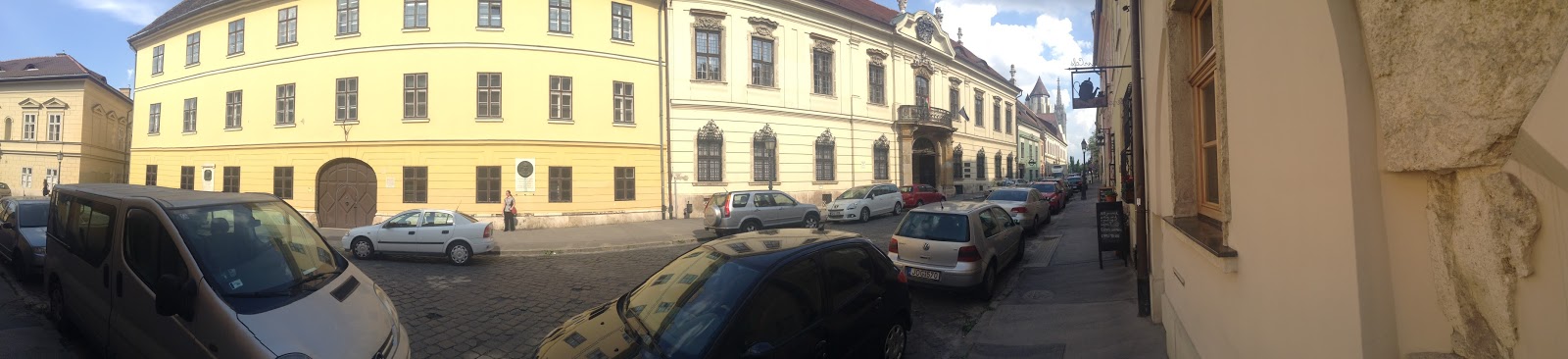
 Probably my favorite discovery, though, was this little street not far from Buda castle. There are some lovely baroque palaces there: this is one of them, though in the 19th century it was used as a prison to house political prisoners, and I use it in my story as the prison that my heroine has to fight her way to get to. So imagine, if you will, this seemingly pedestrian street filled with soldiers (and maybe a dragon or griffin or two). 


Tuesday, June 2, 2015

The Story of Owen

EK Johnston's The Story of Owen, a finalist for the William Morris debut YA award last year (and who shares my agent, which is how the book was on my radar in the first place) has been on my to-read list for some time.

The Story of Owen (Dragon Slayer of Trondheim, #1)

 I really enjoyed this book, which wasn't what I expected in a lot of good ways. Siobhan McQuaid is a pretty ordinary student in her small town in Canada: she's obsessed with her music, she works hard at school, and she mostly lies low. But everything changes when Owen Thorskard moves to town with his father and two aunts--all of them dragon slayers. Because Siobhan lives in an alternate world where dragons still live, and are drawn particularly to carbon emissions, which makes everything from driving to factory operations much more dangerous. Oil magnates organized the Oil Watch program, which requires young dragon slayers to enlist to protect the oil fields (which draw dragons for obvious reasons). Siobhan befriends Owen when they're both late to English and get detention, but when she's drawn into his world, she takes on a position as Owen's bard, called to sing the song(s) of his dragon-slaying to the world. While that sounds like it could be hokey, it's really not--partly because of Siobhan's wryness; partly because Owen and his family are doing something pretty incredible--in a world where top dragon slayers work for the government or command top salaries working for oil industries, Owen's family has chosen to eschew all of that to try and help a rural region that can only pay them in goods.

Things I liked: the setting here was fascinating: not just the world of rural Canada, but the world Johnston created. The alternate dragon mythology was pretty cool too. And I love that we get the story from Siobhan's perspective rather than Owen's. While he's literally the hero of this piece, I liked seeing his world from a bit of a remove, and the bard idea is genius. Siobhan has such a rich voice, full of musical notes and trumpets and woodwinds. And while a romance between Siobhan and Owen would seem like the obvious direction this story to take, that's not exactly what happens--and I liked that here, again, the author veered away from the expected and easy answer.


Sunday, May 31, 2015

Review round-up

Because of travel and more I'm woefully behind on updating my reviews. As I'm thinking of doing away with reviews in any case, except for books I really love, that may not be a bad thing. But, for my own sake as much as anything else, here are the books I've read since I've been gone . . .


Kendall Kulper, Salt and Storm: the setting was the best part of this. Rich, evocative fantasy set in the whaling world of 19th century New England (think Moby Dick, but more accessible). The language was lovely and the atmosphere perfectly drawn: but I didn't love the ending.

Kelly Fiore, Just Like in the Movies cute, not entirely convincing story of two girls who set out to change their romantic fortunes by mimicking movie scenarios.

Kasie West, The Fill-In Boyfriend. I pre-ordered this book: I was that excited to read a new Kasie West book! And while it was fun and harmless, it didn't have quite the same depth or wit as her other books.

Julie Wright, Melanie Jacobsen, Heather Moore, Boardwalks Antique Shop. This collection of three related novellas about romances along Tangerine street in a delightful SoCal town is not quite as much fun as the previous one, but these stories are fun and sweet.


Martina Boone, Compulsion:  Martina has done a lot to support the YA community (she has a great website that runs all kinds of interviews and contests that was hugely helpful to me), and I've been wanting to read her debut for some time. There was lots I loved about it: richly evocative setting in the South, an intriguing cast of characters (Barrie, her scarred--and now dead--mother, her cross-dressing guardian, Eight, and so many more), interesting mysteries about Barrie's past. But while I enjoyed reading the book, I didn't love it, and I'm not entirely sure why. Boone is a good writer, her characters well-drawn and did I say I loved the setting? But I wasn't fully drawn into the world until the end.


Jude Morgan, A Little Folly. Jude Morgan might be the next best thing to reading Georgette Heyer or Jane Austen. He's got a great ear for period language and the details are wonderful. Sometimes the narrative is a little slow, but I still really enjoyed this story about siblings Louisa and Valentine who, when their strict father dies, plan to fully enjoy life--with some unexpected consequences.

A Little Folly

Nichole Van, Intertwine. A sweet, romantic, if sometimes implausible time-travel romance that plunges the heroine into Regency era England.


Josi Kilpack, A Heart Revealed. I've read several of Kilpack's culinary mysteries and liked them but didn't love them, so I was intrigued when I saw she'd written a Regency, even more so when I heard it had starred reviews from Kirkus and Publisher's Weekly. And while the story was more of a slow burn than a fast-action piece, there was a lot I liked about it: especially the extreme humbling of the heroine after she discovers her hair is falling out. I can imagine few things more horrifying to a woman who puts all her value in her personal experience. Amber's humbling and transformation give this Regency a lot more depth than most, and the romance (while I wanted *more*!) was sweet. (And if it looks like I've been reading a lot of Regency lately, well, yes, I have. And I have lots of recommendations.)

Marie Rutkowski, The Winner's Crime. Rutkowski is one of those authors I want to be like when I grow up: her books are effortlessly plotted, well-paced, and the heroes tread that fine line between complicated and unlikeable. I adored book one (The Winner's Curse), and I was so happy to find that the sequel didn't disappoint. It's hard to say much about the book without spoilers, suffice it to say that Kestrel  has engaged herself to the Emperor's heir to save Arin and his kingdom (though of course, she can't tell Arin, and he doesn't understand why she's done it). The politics were fascinating and well-drawn, the writing was sometimes so lovely it hurt, and, of course, the romance is still smouldering.

Friday, May 22, 2015

Since I've been gone . . .

It's been a while since I posted--but with good reason!

My  husband and I spent ten wonderful days in Europe (specifically, Hungary and Vienna) researching setting and period details for my forthcoming trilogy (THE BLOOD ROSE REBELLION, Knopf 2016).

Right after we got back, I plunged into three wonderful days at the LDStorymakers conference, absorbing the wisdom of my writing tribe. I'm only now getting back into the swing of my real life. (Not nearly so exciting).

But here's a sneak peak of what I've been working on:

This is Eszterhaza, a beautiful estate in Northeastern Hungary that belonged to the wealthy Eszterhazy family. Sometimes called the Hungarian Versailles (though I've been to Versailles and this is not quite on that scale!), the estate serves as the setting for part of my debut novel.


The beautiful Sala Terenna, a ground-floor reception room where some dramatic action unfolds near the end of the novel. Spoiler: someone dies.


I'll post more on my trip later, but it was wonderful to be able to actually explore the physical sites, to realize the limits of 19th century Budapest, to wander the same streets my heroine would have walked. Setting is a profoundly important aspect of any novel: place shapes our conception of self, the relationships we have with one another, and so much more.

Wednesday, April 29, 2015

ICYMI: A beginner's primer on writing a book

Once a month, I post at a literary blog called Segullah. While some of the posts are about religious topics, many are not: one of my favorite things about the community there is the group of smart, literary women who post and who frequent the comments section.

Last week, as part of the quarterly "How-To" theme, I posted some tips on writing--and querying--a book. The post was designed primarily for people who aspire to write but aren't very far on their journey. I thought I'd repost here, as I think the information is helpful.


Step One: Write


As far as writing, you simply have to start. Carve out time, even if it’s only fifteen or twenty minutes. Write. I’ve taught writing to a lot of college students, and many of them want to know the secret to writing well. But there is no secret: just practice. I tell them, write a lot. And read.
Neil Gaiman was once asked the trick of becoming a writer. His answer is pretty near perfect: “the only way to do it [write] is to do it.”

Step Two: Find readers

Any good writer will tell you that good writing isn’t possible without good readers. Once you’ve got something written (or even as you write), let it sit for a while, and then find people you trust to tell you how to make it better.

Step Three: Learn about your Craft

Becoming a good writer isn’t just about writing–it’s also about learning to make your writing better. Good readers can help. But you’ll also want to learn about the craft of writing; I heard LDS author Janette Rallison recommend that new writers not send out their work until they’ve read at least one book on craft. Some of my favorite craft books include Anne Lamott’s Bird by Bird, Stephen King’s On Writing, Robert McKee’s Story, and Janice Hardy’s website, Fiction University (not a book, but oh-so-helpful).

Also, go to writing conferences. LDStorymakers‘ annual conference is next month, and it’ s a great place to meet other writers (including potential readers), agents, and editors. (I met my agent there last year). Emily and I will both be there this year. If you write for children or young adults, SCBWI (The Society for Children’s Book Writers and Illustrators) has local and national events and conferences. Not only are conferences a great place to learn about the business, but there’s a synergy that comes from being around people with your same goals that always motivates me to work harder.

Step Four: Revise

The more I write and teach writing, the more convinced I become that the best writers aren’t naturally good writers–they’re good revisers. Very few of us nail our vision on the first time through, and those people, as Anne Lamott reminds us in Bird by Bird, generally aren’t people we like very much anyway.

Step Five: Decide on a Publishing Path

These days, there are lots of different ways for writers to put their work out there. Some choose to self publish, via Createspace or any number of other methods. That can be a great choice, especially for people who want full creative control over their manuscript. But it isn’t, as it happens, a path that I personally know much about.

Another option is publishing with small or regional presses (like Covenant, Deseret Book, Cedar Fort, Jolly Fish Press, and many more). Most of these presses will take submissions directly from authors, so you can start submitting as soon as your manuscript is done.

However, I knew fairly early on that I wanted to try for a traditional publisher (which typically refers to one of the “big five” publishing companies–Penguin Random House, Macmillan, HarperCollins, Hachette and Simon & Schuster–as well as to smaller but more established mid-size presses, like Norton, Houghton Mifflin Harcourt, Hyperion). Part of this stems from a sense of legitimacy: I’m also a part-time English professor, and I knew that landing a book deal with a bigger company would garner more respect from my colleagues. (Which maybe isn’t the best reason for deciding on a publishing path).

But publishing with a traditional publisher means, more often than not, that you also need a literary agent to represent you because these publishers won’t take unagented submissions. Finding an agent can take time–months or years, in some cases. It took me two manuscripts and nearly four years to get an agent. Good places to start looking for an agent include Agent Query, Query Tracker, and Writers Digest’s Guide to Literary Agents. I also like looking at the acknowledgment pages of my favorite books to see which agents represent those authors I love. However, just because someone says they are an agent doesn’t mean they are a good agent: you can also check places like Publisher’s Marketplace that report agent deals (which requires a subscription and is self-reported, so not always accurate) and the forums at Absolute Write (where writers report their experiences with different agencies) and Preditors and Editors.

Step Six: Send Query Letters

A query letter is essentially a cover letter for your book: it explains what your book is about and what your qualifications are as a writer. Whether you opt for small presses or finding an agent, you’ll have to write one. Some of my favorite resources on writing queries are here and here and here.  Even when you’ve written a query, try to get several different pairs of eyes on it, including people who haven’t read your book.

A word of warning: querying is rough. Even authors who go on to be successful have lots of rejections. In my most recent round of querying, I sent close to fifty queries. I was relatively successful (I had requests from just over half of those queries), but even those requests mostly turned into rejections. (You can read more on my take on querying here).

Step Seven: Wait

Once you’ve sent out queries, it takes time to hear back from agents and editors. If an agent does want to represent you, they will typically set up a time to call and talk about your book and their plans for it (known in the industry as “The Call”).

Once you accept an agent’s offer, the agent typically asks for still more revisions before sending your book out on submission to editors. This looks a lot like querying, except that you have less control over what happens: your agent acts as an intermediary, sending the materials out and getting the responses from editors. In my case, my editor called or forwarded me the information every time an editor passed on my book (which was 11 out of 12 editors, in my case).

But if you’re lucky, one day you  might also get the call you’ve been waiting for–where your agent calls to say, “We’ve sold your book!” (In my case, to Michelle Frey at Knopf books).

Then you celebrate–and wait some more. For edits, copy edits, proofs, and eventual publication. Most of the Big Five publishers buy books 18 months to 2 years out from their publication date. (My book sold in February. It won’t come out until Fall 2016).

While this post is long, it’s also only a fraction of the information out there on the process of publishing a book. But for anyone interested, I’m happy to answer questions about the process in the comments!