Showing posts with label nineteenth-century America. Show all posts

Tuesday, September 30, 2014

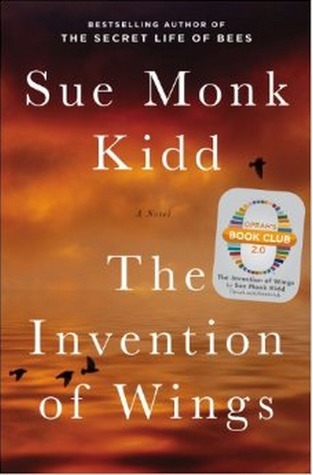
The Invention of Wings

The Invention of Wings I read quite a bit about the Grimke sisters in graduate school while studying nineteenth-century women's rhetoric (including both Sarah's treatise on the equality of the sexes and Angelina's letter to the Christian ministers of the South), so I was fascinated to find that Kidd had built her latest novel around their lives.

Although there were places where the pacing dragged a little for me, I thought Kidd did a nice job of presenting two distinct experiences with slavery: Sarah Grimke, who grew up benefiting from the practice but who resisted it (though she spends a long time trying to figure out how to shape that resistance), and Handful, one of her family's slaves. I liked that Handful never let slavery define her, and she did what she could to resist it (though her actual involvement with Denmark Vesey seemed a bit of a stretch--she also seemed to have an unusual amount of freedom to visit Charleston).

But I was more drawn to Sarah, mostly because I could relate to her struggle with knowing something is wrong but trying to figure out how to resist it. Sarah was a slow-blossoming character who didn't come into her own until her thirties--and I felt like that was a much more realistic approach than what I sometimes see, which is characters who immediately see injustice and know instinctively how to respond to it. I appreciated that Kidd focused her attention on the lesser-known of the two sisters, because I think Sarah has an equally interesting story (if not as flamboyant--if you haven't read Angelina's speech at Pennsylvania Hall, you should).

Wednesday, July 9, 2014

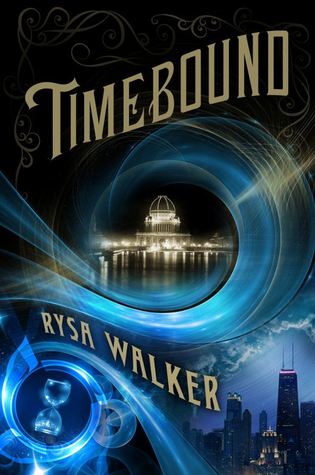
Timebound

Timebound (The Chronos Files, #1) I got a copy of Timebound, by Risa Walker, as part of the Amazon First promotion a few months ago, but it's taken a while to work through my TBR list . . . The premise was intriguing: sixteen-year-old Kate Pierce-Keller discovers that she belongs to a family whose genetic makeup allows them to travel through time (as a point of fact, her grandmother was born over a century *after* she was). Kate's understandably skeptical--until someone begins manipulating her timeline and making changes in the past that threaten her own existence.

The plot for this novel is fairly complex, as it involves not only the changing timeline, but a religious group, the Cyrists, who are linked to the chronological changes and gain increasing power in each new iteration of the timeline. Figuring out how the two are linked is part of the mystery driving the novel.

And of course, there's the romantic angle, starting with a handsome young man (Kiernan) who kisses her on the subway and disappears--and who lived nearly a century before Kate. And then there's the very present Trey, who becomes Kate's only friend as her timeline shifts. However, Trey presents Kate with a problem: if she fixes the changes in her timeline, Trey will no longer know who she is, he'll have no memory of their relationship. I thought the triangle actually worked here--I liked both men (though the fact that she met Kiernan as a young boy and found herself attracted to him only a short time later when she met him again as a teen skeeved me out a little), and I'd probably read the next installment just to see who she winds up with.

I found the plot pretty fascinating--if at times hard to keep straight (although I think that was more on my end than the writer's, who seemed to work hard to keep things clear). I also loved the historical element of the Chicago World Fair in 1893: the historical details added a lot to the book. (However, I do have to note that it's not entirely historically accurate: the Seneca Falls Women's convention was in 1848, not 1838).

The characters were a little harder for me: at the end, I'm still not sure I have a good grasp on Kate herself, other than that she's a typical teenager who likes onion rings and knows martial arts. This might be an inevitable consequence of a plot-heavy book.