Showing posts with label class system. Show all posts

Wednesday, August 6, 2014

Dancing Alone at the Debutante Ball (IWSG)

IWSG Badge


 (My IWSG post is late in the day--I blame kids and blogger (which is still fighting me on the format)--but it's here!)
One of the great things about being in a long-term partnership is not having to date.
Sure, you miss out on the sizzling excitement of new possibilities (nothing quite like the prospect of  first kiss), but I'll trade the uncertainty and constant weighing of expectations for stability any day.
I was never much good at dating anyway. I'm not conventionally pretty, I'm introverted, I analyze too much, and the consciousness that I was being evaluated made me more than usually awkward.
I thought when I got married I'd left those sensations behind.
Last Friday, I sent out a new batch of queries (it's been over  year since I queried--and shelved--a middle grade novel). And suddenly, I'm awash with all those feelings.
This stage of querying--where I haven't heard anything yet (well, one request, but no rejections)--is kind of awesome. Anything is possible. Of course, reality will set in soon enough.
Since I'm querying a historical fantasy novel, my mind is bit fixed on historical comparisons. In nineteenth-century England, a young woman of a certain class was prepped for marriage her entire life. A debutante ball held in her honor announced her entrance to society--and her marital eligibility. (I don't think it's an accident that one's first novel is similarly called a debut).


This is currently me: wearing my prettiest dress (a nice shiny query letter), standing on the fringes of a society I hope to join, waiting for interested partners to ask me to dance (see the manuscript), in the hopes of a long-term partnership.
But the waiting is hard. The sense of powerlessness is hard (one does as much as one can to dress to flatter one's strengths, to reevaluate what isn't working), but there is only so much I can do if I want to traditionally publish--which I do.
It's good thing I love dancing (and writing). I may be waiting for a response, but I don't have to wait for a partner to dance my own waltz.
Anyone else in the query trenches feel like they're dancing alone at a debutante ball?

Tuesday, July 29, 2014

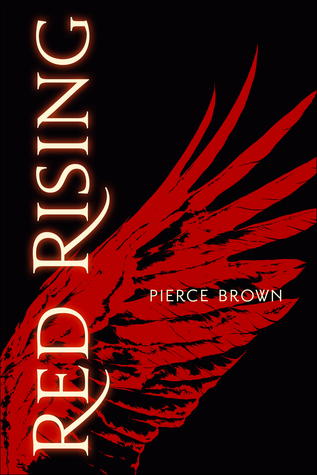
Red Rising

Red Rising (Red Rising Trilogy, #1) Lots of books have been compared to The Hunger Games--by publicists, by wanna-be-writers, publishers, and more.

Most of them don't live up to the hype.

This one, with a cover blurb bravely comparing the hero to Ender Wiggins and Katniss, actually does.

It's a frenetic, wild, violent read. I thought about it when I wasn't reading, and when I was reading, I stopped only reluctantly.

In a futuristic society, where one's future is determined by one's caste, Darrow is a red, the lowest of the low. His people mine underneath the surface of Mars, searching for a mineral that will help terraform the planet and make it habitable--they are told--for the other color castes seeking refuge from earth.

At sixteen, Darrow is already married and a man--a helldiver for his Lykos clan. He dreams of revolution, as his father did, but mostly he just works and lives as hard as he can. Reds don't tend to live long.

But when the unthinkable happens and Darrow loses nearly everything he cares for, his dreams change. He's given a mission by a secret society: infiltrate the Golds, the highest of the castes. With some surgical assistance, Darrow is transformed: his face, his body, his eyes, even his brain.

Darrow manages to make it into the Institute, where the ruling Golds are made Peerless (scarred warriors who are strong, ruthless, and committed to maintaining their power). And there, everything starts changing.

For starters, there's the passage--a bizarre, horrible Darwinian rite of passage. (This book is not for the faint-hearted. Or the very young. While it's rated YA for the protagonist's age, it's definitely violent).

Then there's the Institute's war games, where Darrow and forty-nine others are drafted into house Mars and have to compete against 11 other houses (all based on Roman gods). The resulting rivalries are no-holds barred fighting, meant to teach the students how to fight, how to cheat, how to survive--and how to become leaders.

Darrow fails. A lot. He makes stupid mistakes. A lot. But, impressively, he grows.

So often novels like this are focused on the plot and world-building--but Darrow, despite his impressive intelligence and physical skills, is not perfect. His character arc in the novel was painful, heart-wrenching, but felt believable.

Of course, not everything in the novel was believable. (For one, why is it that none of the Gold children knew what the Passage was? Presumably, the leaders have made it through. Also presumably, they would have told their children what to expect--or at least made sure they could survive it.)

But the plot and characters kept surprising me, and I raced through the book.

By the end, I'll admit, I was a little tired of the violence. But I think that's part of the point: the cost of maintaining a hugely unequal class society. And the cost of absolute power.

Definitely worth-reading--particularly for fans of The Hunger Games, Ender's Game, John Scalzi's Old Man's War and other sci-fi/dystopian rebellions.